
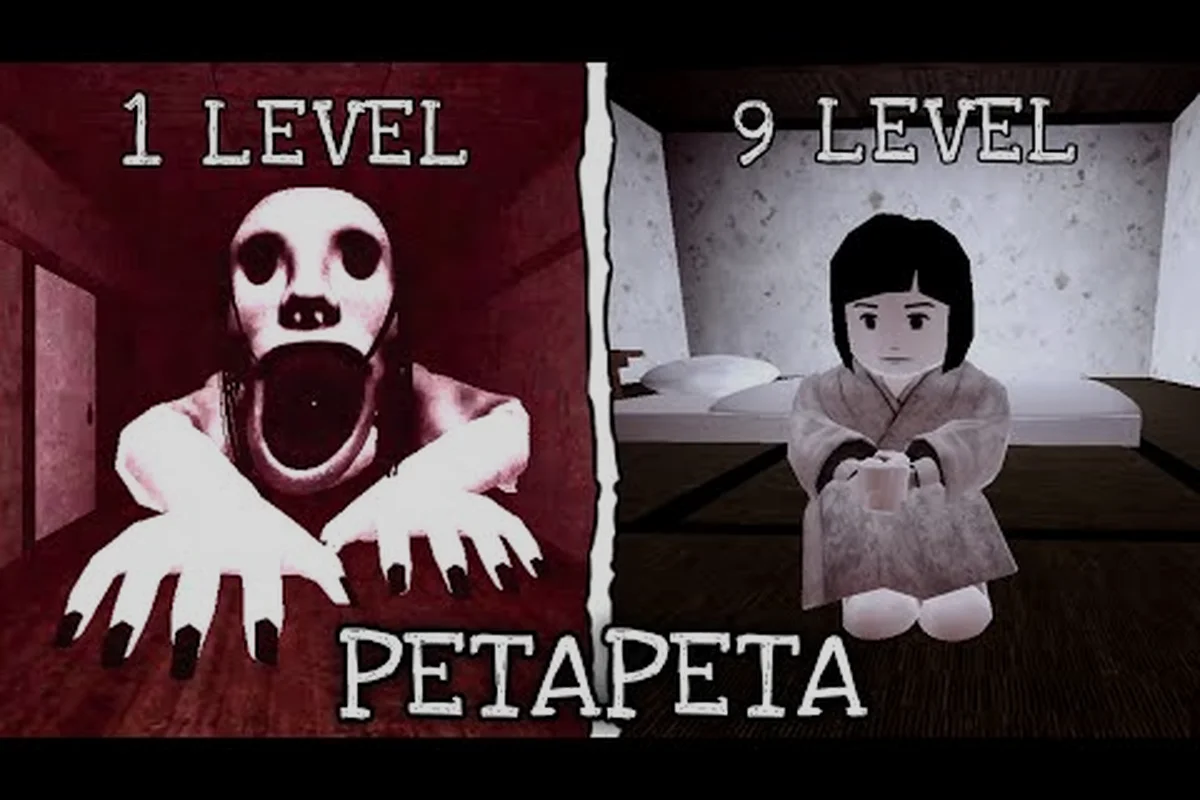
PETAPETA all levels follow a single, tightly paced progression route, and knowing the full list up front saves you from wandering through stages that only exist to teach one mechanic. This breakdown covers the complete level order, how many stages the game actually contains, and where each section of the campaign slows down or speeds up.
The value here is orientation. If you are stuck on a stage number, unsure whether you have missed content, or planning a second run, a clear level list answers those questions in seconds rather than after an hour of backtracking.
How many levels are in PETAPETA?
The campaign is built around ten numbered levels split into two halves of five, with a short prologue and a finale sequence that the game treats as part of level 10. Community reports consistently describe the structure as PETAPETA levels 1 to 10, and that count holds across the standard difficulty settings.
What confuses many players is that the game rarely shows a level number on screen. Instead, you get a chapter title card and a room counter. That design choice makes it easy to lose track of where you are in the overall progression, especially if you put the game down for a few days mid-chapter.
| Structure element | Count | Notes |
|---|---|---|
| Numbered levels | 10 | Split into two halves of five |
| Prologue segment | 1 | Tutorialized, no combat pressure |
| Chapter title cards | 6 | Some cards cover two levels |
| Finale sequence | 1 | Treated as part of level 10 |
| Total playable stages | 12 | Including prologue and finale |
According to community data, a first playthrough runs roughly 6 to 9 hours, depending on how much time you spend hunting optional rooms. Speedrunners have pushed the full route well under two hours, which tells you the level count is small but the content density per stage is high.
The practical takeaway: when someone asks how many levels PETAPETA has, the honest answer is ten numbered stages, but the experience you actually play through is closer to twelve segments once the prologue and finale are counted. The gap between those two numbers is exactly why "PETAPETA how many levels" keeps returning conflicting answers — the table above shows the prologue and finale each add a playable stage without a number, and the six chapter title cards further blur the count since some cards span two levels. If you are tracking progress toward PETAPETA levels 1 to 10, count title cards and room counters rather than expecting an on-screen level number.
PETAPETA level list in order
Here is the full level list as it appears in the campaign, with the mechanic each stage introduces and a rough difficulty read. This is the reference table to bookmark if you are working through the game stage by stage.
| Level | Focus | New mechanic | Difficulty |
|---|---|---|---|
| Prologue | Controls and tone | Movement, interaction | Very easy |
| Level 1 | First scare | Basic evasion | Easy |
| Level 2 | Sound cues | Audio-based threat | Easy |
| Level 3 | Line of sight | Hiding and cover | Moderate |
| Level 4 | Timing windows | Moving hazards | Moderate |
| Level 5 | Resource pressure | Limited items | Moderate |
| Level 6 | Combined threats | Layered mechanics | Hard |
| Level 7 | Spatial puzzles | Route planning | Hard |
| Level 8 | Pursuit sequences | Chase pressure | Hard |
| Level 9 | Endurance | Long-form tension | Very hard |
| Level 10 | Finale | Everything at once | Very hard |
The first half, PETAPETA levels 1 to 6, is where the game teaches its vocabulary. Each stage adds exactly one new idea and then tests it in a low-stakes room before combining it with earlier mechanics. Levels 1 through 3 are forgiving enough that most players clear them without a death.
Levels 4 through 6 are where the training wheels come off. Level 5 in particular catches people out because it restricts your item supply for the first time, and level 6 stacks two threat types in the same room. If you feel a sudden difficulty spike around the midpoint, that is intentional design rather than you playing badly.
The second half, PETAPETA levels 1 to 10 viewed as a whole, shifts from teaching to testing. Levels 7 and 8 are the puzzle-and-chase pair, level 9 is the endurance stretch, and level 10 pulls every mechanic back in for the closing sequence. The final level breakdown covers that last stretch in detail if you want to prepare before you reach it.
Where the level numbering gets confusing
The game's chapter title cards do not map one-to-one onto level numbers. Two of the cards cover a pair of levels each, which means the card count (six) and the level count (ten) never line up. Players who track progress by card often think they are further along than they are.
A second source of confusion is the prologue. It plays like a level, it has its own room layout, and it ends with a transition that feels like a stage clear, but it is not numbered. Some community level lists count it as level 0, others fold it into level 1. Either convention works as long as you stay consistent.
PETAPETA progression guide: how the route flows
Progression in PETAPETA is strictly linear. There is no level select at the start, no branching path, and no way to skip ahead. You unlock stages by finishing the one before them, and the game autosaves at each transition so you never lose more than a single stage of progress.
That linearity is worth understanding because it shapes how you should approach a stuck section. Since you cannot leave and grind elsewhere, the only productive move is to learn the room. The chapter and stage structure guide breaks down how each chapter groups its levels, which helps when you want to know how much of a chapter remains.
| Progression checkpoint | What unlocks | Typical playtime |
|---|---|---|
| Finish prologue | Level 1 | 10-15 minutes |
| Clear level 3 | Mid-campaign pacing shift | 1.5-2 hours |
| Clear level 6 | Second-half difficulty tier | 3-4 hours |
| Clear level 9 | Finale access | 5-7 hours |
| Clear level 10 | Completion state | 6-9 hours |
The pacing curve is deliberately front-loaded with teaching and back-loaded with pressure. Levels 1 through 3 take about as long combined as level 9 does on its own, because level 9 is an endurance stage with very few safe rooms. Expect the last third of the game to take noticeably longer per stage than the first third.
Does the game have a level select?
A level select becomes available after you finish the campaign, letting you replay any cleared stage. This matters for two reasons: it makes cleanup of missed optional rooms practical, and it gives you a low-risk way to practice a specific room before attempting a full run. The speedrun and completion route explains how the level select interacts with full-game runs.
Before completion, though, you are locked into the linear route. If you are the type of player who likes to backtrack and sweep for collectibles, accept now that you will need a second pass with level select unlocked. The campaign enforces a strict stage-by-stage order across levels 1 to 6, so any optional room you skip during a first run cannot be revisited until the credits roll and the level select flag is set. Factor that into your route planning: a first pass focused purely on reaching the ending is faster than a completionist sweep, and the cleanup pass afterward lets you target specific stages directly rather than replaying the entire sequence.
Difficulty curve across all ten levels
The difficulty curve is not a straight line. It steps up at three specific points, and each step corresponds to a new mechanic being layered onto the existing set rather than replacing it. Understanding those steps helps you predict when a stage will feel harder than the one before it.
| Difficulty tier | Levels | What changes | Player experience |
|---|---|---|---|
| Teaching | Prologue-3 | One mechanic at a time | Relaxed, low death count |
| Testing | 4-6 | Mechanics combined | First real failures |
| Pressure | 7-8 | Route planning + chases | Frequent retries |
| Endurance | 9-10 | Sustained tension | Long sessions, high focus |
The jump from level 6 to level 7 is the sharpest. Levels 1 through 6 mostly let you react to what is in front of you, while level 7 requires you to plan a route before you commit to it. Players who breeze through the first half often hit a wall here because the skill being tested changes from reflexes to foresight.
Level 9 is the other notable spike, but for a different reason. It is not mechanically harder than level 8; it is simply longer, with fewer checkpoints. Fatigue becomes the real opponent. Taking a break before starting level 9 is genuinely good advice rather than filler.
Which level is the hardest?
Community consensus points to level 9 as the hardest single stage, with level 10 close behind. Level 9 wins the vote because of its length and sparse checkpointing, while level 10 is harder moment-to-moment but more forgiving to retry since its sections are shorter.
If you are deciding where to spend practice time, level 9 deserves it. The monster and threat guide is useful context here, since several of the threats that appear in level 9 were introduced much earlier and are easy to have forgotten by the time you reach it.
Tips for working through the level list efficiently
Knowing the level order is only half the job. The other half is approaching each stage with the right expectations, which mostly means resisting the urge to rush rooms you have not read yet. The ten-stage structure is deliberately front-loaded: levels 1 through 6 teach and test fundamentals, while levels 7 to 10 assume you have internalized them, so a habit of skipping the read-the-room pause in the early PETAPETA levels compounds into repeated deaths once the puzzle-heavy and checkpoint-sparse stages arrive. Treat each stage as a lesson with a specific mechanic to bank, not a corridor to sprint through, and the later difficulty curve feels like a natural step rather than a wall.
-
Read the room before you move. Almost every failure in levels 1 through 6 comes from walking into a threat you had time to see. A five-second pause at each doorway prevents most deaths.
-
Learn the audio cues in level 2. That stage exists specifically to teach you that sound carries information. Players who tune out the audio there struggle later when visual cues are deliberately obscured.
-
Bank your items in level 5. The resource restriction is the point of the stage. Hoarding consumables through level 5 and 6 makes the second half noticeably smoother.
-
Plan level 7 on paper if you need to. Route puzzles reward a moment of thinking more than a minute of retrying. Sketching the room layout is not overkill.
-
Split level 9 into sessions. Because checkpoints are sparse, a tired run wastes more time than a fresh one. Stop at a safe room rather than pushing through.
-
Replay with level select for cleanup. Once the campaign is done, the level select turns collectible hunting from a chore into a short checklist.
The puzzle-heavy stages, particularly 7 and the optional rooms scattered through 3 and 5, are covered in more depth in the puzzle solutions guide if a specific sequence is holding you up. Most players only need it for one or two rooms.
What changes on a second playthrough
Once you have cleared all ten levels, the game opens up in ways that reframe the level list. Level select lets you jump to any cleared stage, and your knowledge of the route compresses the campaign dramatically. A second run typically takes a third of the original time.
The interesting shift is that stages you found hard become the ones you enjoy most. Level 9, the endurance wall on a first run, becomes a satisfying test once you know its rhythm. Level 7's route puzzles stop being obstacles and start being the reason to replay.
Completion tracking also becomes clearer. With level select available, you can see exactly which stages still have unclaimed optional content, which turns a vague sense of "did I miss something" into a concrete list. That alone justifies a second pass for most players.
Frequently Asked Questions
How many levels does PETAPETA have?
The campaign contains ten numbered levels, plus a prologue and a finale sequence that the game treats as part of level 10. Counting every playable segment, you go through roughly twelve stages from start to finish, though only ten carry a level number.
What are PETAPETA levels 1 to 6 like?
The first six levels are the teaching half. Each stage introduces one new mechanic and tests it in a controlled room before combining it with earlier ideas. Levels 1 through 3 are very forgiving, while levels 4 through 6 begin stacking threats and restricting resources.
Is there a level select in PETAPETA?
Yes, but only after you finish the campaign. Before completion the route is strictly linear with no skipping. Once unlocked, level select lets you replay any cleared stage, which is the practical way to clean up missed optional rooms and practice difficult sections.
Which PETAPETA level is the hardest?
Community consensus names level 9 as the hardest, mainly because of its length and sparse checkpoints rather than raw mechanical difficulty. Level 10 is more intense moment to moment but easier to retry, since its individual sections are shorter and more forgiving.
How long does it take to finish all levels?
A first playthrough runs about 6 to 9 hours depending on how thoroughly you explore optional rooms. The last third takes disproportionately longer per stage, so budget more time for levels 7 through 10 than for the opening half of the campaign.
The full level list comes down to ten numbered stages wrapped by a prologue and a finale, arranged in a curve that teaches first and pressures later. Track your position by level number rather than chapter card, expect the sharpest difficulty step at level 7, and treat level 9 as an endurance test rather than a skill check. With that map in hand, the progression route stops being a mystery and becomes a plan.