
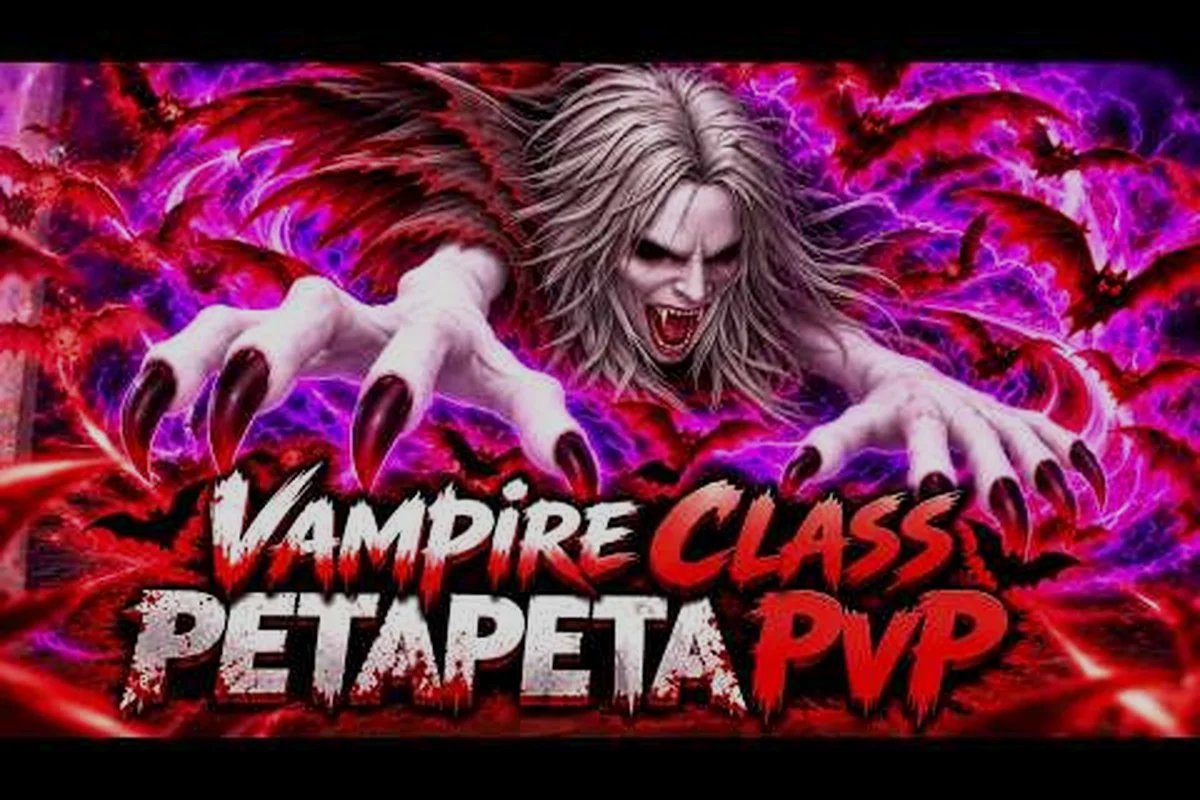
PETAPETA become the monster mode is the round type that flips the usual horror script, letting one player hunt instead of hide, and understanding that flip is what separates a clean win from a chaotic wipe. Whether you queue as the hunter or the hunted, the same round rewards preparation, map awareness, and a little nerve.
How the PETAPETA monster mode round actually works
The PETAPETA monster mode is a round-based PvP structure where one player takes the monster role while everyone else plays survivor. The round begins with a short grace period, the monster spawns away from the group, and survivors scatter to objectives. From there, the clock does the storytelling: survivors race to finish tasks, the monster races to interrupt them.
What surprises most new players is how quickly the PETAPETA multiplayer mode shifts tone. The first two minutes feel almost calm, then the first survivor goes down and the whole lobby changes behavior. Community reports describe the same pattern repeatedly — early caution, mid-round panic, late-round desperation.
Here is the basic round flow, based on community testing: the grace period runs roughly 20–40 seconds, giving the monster just enough time to learn the spawn layout and pick a patrol route before survivors split toward objectives. The early hunt (1–2 minutes) is where one clean hit matters most — a single early down slows survivor progress far more than a late chase. Mid-round pressure (2–4 minutes) rewards breaking line of sight and ambushing rotations rather than tailing one survivor, and the final two minutes usually collapse into the monster camping the last objective while survivors force the final push together.
| Phase | Duration (approx.) | Monster goal | Survivor goal |
|---|---|---|---|
| Grace period | 20–40 seconds | Learn spawn layout, pick a patrol route | Split up, locate objectives |
| Early hunt | 1–2 minutes | Land one early hit to slow progress | Complete first objectives quietly |
| Mid-round pressure | 2–4 minutes | Break line of sight, ambush rotations | Revive, regroup, keep objectives moving |
| Endgame | Final 2 minutes | Camp the last objective | Force the final push together |
The key takeaway is that the monster never wins by chasing constantly and survivors never win by hiding forever. Both sides are on a timer, and the timer favors whoever applies pressure more efficiently. Concretely, a monster who spends the entire early hunt tailing one survivor often reaches the 2–4 minute mid-round window with no map control, letting the survivor team chain revives and push objectives uncontested. The efficient play is to convert that early hit into a patrol loop across objective rotations, forcing survivors to move through ambush points rather than letting them reset freely.
Why the vampire class changes the round
The vampire class is the most discussed monster variant in the PETAPETA multiplayer horror conversation, and for good reason. It trades raw speed for sustain, meaning a vampire player who lands hits stays in the fight longer than a pure bruiser. Players report that vampire rounds tend to run longer because the monster can recover between engagements instead of retreating to heal.
That sustain changes survivor math. Against a fast monster, you can outrun and reset. Against a vampire, a single bad hit often snowballs into a second one because the monster does not need to leave. If you want the full breakdown of how the transformation system feeds into this class, the transformation and touch mechanics guide explains the underlying rules.
Survivor tactics that hold up under pressure
The PETAPETA survivor mode is where most players lose rounds, not because the monster is overpowered but because the team spreads thin and stops communicating. In PETAPETA become the monster mode, the monster player feeds on that disorganization: every isolated survivor is a free pickup, and each downed teammate hands the monster more momentum to snowball the next chase. Solid PETAPETA survival mode tips start with one principle: objectives before heroics — treat the objective as the team's anchor, rotate as a group, and call out the monster's position so nobody gets caught alone in a corridor.
A few habits that consistently pay off: rotate along walls instead of open lanes so the monster's lunge has nothing to grab, and pre-clear each objective room's escape route before anyone interacts with the objective itself. In PETAPETA become the monster mode, the monster's chase pressure spikes the moment a survivor breaks line of sight from the group, so survivors who hug cover and rejoin the pack deny the monster its easiest snowball. Treat every objective as a timed commitment — start it only when all four survivors are accounted for and the monster's last known position is at least one room away.
-
Assign a runner early. One survivor commits to objectives while others create noise elsewhere.
-
Never revive in the open. Drag downed teammates behind cover before starting the revive.
-
Track the monster's last known position out loud. Silence is how ambushes land.
-
Break the habit of sprinting everywhere. Sprint noise gives away your rotation.
-
Bank one safe objective for the endgame instead of finishing everything early.
Reading the monster's patrol pattern
Monsters are predictable in a way that survivors rarely exploit. Most monster players fall into a loop: check the highest-progress objective, sweep the nearest corridor, then rotate back. Once you notice the loop, you can work the opposite side of the map for a full objective cycle.
Community data suggests that survivors who deliberately bait a patrol — one player making visible noise while another works quietly — complete objectives noticeably faster than teams that play passively. The monster has to respond to noise, and every response costs it time.
| Survivor mistake | What it costs | Fix |
|---|---|---|
| All four players on one objective | Instant multi-down if the monster arrives | Split into pairs across two objectives |
| Reviving in the open | Free second down for the monster | Move behind cover first |
| Ignoring the timer | Panic rush at the end | Track remaining objectives every 30 seconds |
| Sprinting near objectives | Reveals your position | Walk within two rooms of the objective |
Monster-side tactics for the PETAPETA become the monster mode
Playing the hunter is a different discipline entirely. The PETAPETA become the monster mode rewards patience over aggression, because a monster that overcommits to one chase loses map control everywhere else. Your job is not to catch everyone — it is to make sure nobody feels safe finishing an objective.
Three habits define strong monster play: Patrol wide, not deep, take the first hit you are offered, and guard the last objective, not the first. Each maps directly onto the mode's core tension — the monster's speed advantage in PETAPETA become the monster mode only pays off when you convert it into pressure across the whole map, not into a single tunnel-visioned chase. A monster that sweeps between objectives forces survivors to second-guess every rotation, while one that commits to a full area clear hands the survivor team free time to reset generators and heal. Treat every survivor sighting as a routing decision, not a kill order.
-
Patrol wide, not deep. Sweep between objectives rather than clearing one area completely.
-
Take the first hit you are offered. A wounded survivor changes team behavior more than a chase.
-
Guard the last objective, not the first. Endgame camping wins more rounds than early aggression.
Using the vampire class to snowball
With the vampire class, the snowball is the whole strategy. Land one hit, stay in the fight, and let the sustain do the work. The mistake most vampire players make is retreating after a successful hit out of habit — the class is built to keep pressing while the survivor is wounded and the team is scrambling to respond.
If you are still learning the monster role, the PVP mode strategy guide covers the wider versus structure and how rewards scale with round performance, while the table below breaks down how the vampire snowball stacks up against constant chase, wide patrol, and objective camping. Note that the snowball's listed weakness — coordinated body-blocks — is exactly what the guide's survivor-side advice teaches, so reading both sides lets you predict when a team is set up to wall you off after the first hit. It pairs well with the class-specific advice here.
| Monster approach | Strength | Weakness |
|---|---|---|
| Constant chase | Fast pressure | Loses map control, easy to bait |
| Wide patrol | Denies objectives everywhere | Fewer confirmed downs |
| Objective camping | Wins endgame reliably | Weak early pressure |
| Vampire snowball | Sustained pressure after first hit | Punished by coordinated body-blocks |
Comparing survivor and monster priorities side by side
The two roles look like opposites, but they share one core rule: whoever controls tempo controls the round. Survivors control tempo by forcing the monster to react to noise and objective progress. The monster controls tempo by forcing survivors to react to pressure and revives.
Here is the direct comparison that most guides skip: it is not enough to know your own role's checklist — you have to read the opposing role's priorities and counter them in real time. When you play as the monster, watch for the survivor tell of two objectives moving at once; that is your cue to abandon the slow patrol and cut the faster route before the second generator or fuse box completes. Conversely, as a survivor, a monster that suddenly stops chasing is usually rotating to camp the last objective, so pre-place a decoy noise source to bait it away.
| Priority | Survivor | Monster |
|---|---|---|
| First 60 seconds | Spread out, find objectives | Learn spawns, pick a patrol |
| Mid-round | Keep two objectives moving | Interrupt the fastest one |
| When a teammate goes down | Cover, then revive | Push the revive location |
| Endgame | Group push on the last objective | Camp the last objective |
| Biggest mistake | Hiding instead of progressing | Chasing instead of patrolling |
Notice that both sides win by applying pressure in the right place at the right time. A survivor team that hides loses on the clock. A monster that chases loses on map control. The round is essentially a tug-of-war over who gets to dictate where the action happens.
When to break your own rule
Rigid tactics lose to adaptive ones. If the monster is clearly camping the final objective, survivors should finish a different one first and force a rotation. If survivors are grouped tightly, the monster should abandon the patrol and commit to a multi-down. Reading the lobby matters more than following a script.
Players who want a broader baseline before diving into PvP rounds will find the core survival tips guide useful, since many of the awareness habits carry directly into survivor rounds. The overlap is deliberate: sound-cue tracking, checking your six before committing to an objective channel, and pre-planning an escape route are the same instincts that let you read a monster's patrol pattern and call its rotation early. Treat the guide as the foundation layer, then layer PETAPETA-specific monster-mode reads—objective priority, group spacing, and down-count pressure—on top of it.
Difficulty scaling and how it affects multiplayer rounds
Difficulty settings change the multiplayer experience more than most players expect. Higher difficulties tighten the grace period, increase monster pressure, and reduce the margin for error on revives. If you are stepping up from standard rounds, the hard mode guide explains the unlock path and what actually changes.
The pattern across difficulties is consistent: every tier compresses the same three variables — grace period, monster pressure, and survivor margin — rather than introducing new mechanics. On Standard you can absorb a missed revive and still recover the round; on Hard the shorter grace period means a single late rotation into the monster's patrol zone snowballs into a lost survivor; on Super hard the minimal grace period turns any hesitation at an objective into a round-ending pick. Because the underlying systems stay identical, the skill that transfers between tiers is tempo management, not reaction time — the players who climb fastest are the ones who already internalized patrol spacing and objective splitting on Standard.
| Difficulty | Grace period | Monster pressure | Survivor margin |
|---|---|---|---|
| Standard | Comfortable | Moderate | Forgiving revives |
| Hard | Shorter | High | Tight revive windows |
| Super hard | Minimal | Relentless | One mistake ends the round |
The important insight is that tactics scale better than reflexes. The same patrol discipline and objective splitting that wins standard rounds wins harder ones too — you simply have less time to execute. Players who learn the tempo game early adapt to higher difficulties far faster than players who rely on raw reaction speed.
Frequently Asked Questions
How does the PETAPETA become the monster mode pick the monster player?
The role is assigned at round start, typically rotating between players across matches so everyone gets a turn as the hunter. Community reports note that the assignment is automatic rather than chosen, which keeps lobbies balanced and prevents one player from monopolizing the monster role every round.
Is the vampire class the strongest monster option?
It is the most forgiving rather than strictly the strongest. The vampire class trades burst speed for sustain, which makes it excellent against disorganized survivor teams but weaker against coordinated groups that body-block and rotate cleanly. Fast monster variants still outperform it against highly skilled survivors.
How many players join a PETAPETA multiplayer horror round?
Rounds are built around a small survivor group facing a single monster, which keeps the tension high and communication manageable. Larger lobbies exist in the wider versus structure, but the core monster round stays intimate so that every survivor's decisions visibly matter to the team outcome.
What is the single best survivor habit to build first?
Learning to track the monster's last known position out loud. Most survivor wipes happen because the team loses track of where the hunter is and gets caught mid-objective. Vocal position tracking costs nothing and prevents the majority of avoidable downs in early and mid-round play.
Can survivors win without completing every objective?
Yes, but only by controlling tempo. Survivors win by forcing the monster to respond to pressure in multiple places at once, then finishing the final objective as a group. Teams that hide and wait for the timer almost always lose, because the monster gains map control for free while they stall.
The PETAPETA become the monster mode is ultimately a tempo game dressed up as a horror round. Survivors win by keeping objectives moving and never letting the hunter dictate where the team goes, while the monster wins by patrolling wide, taking the first hit offered, and camping the last objective instead of chasing ghosts. Learn the round flow, respect the timer, and both roles become far more winnable.