
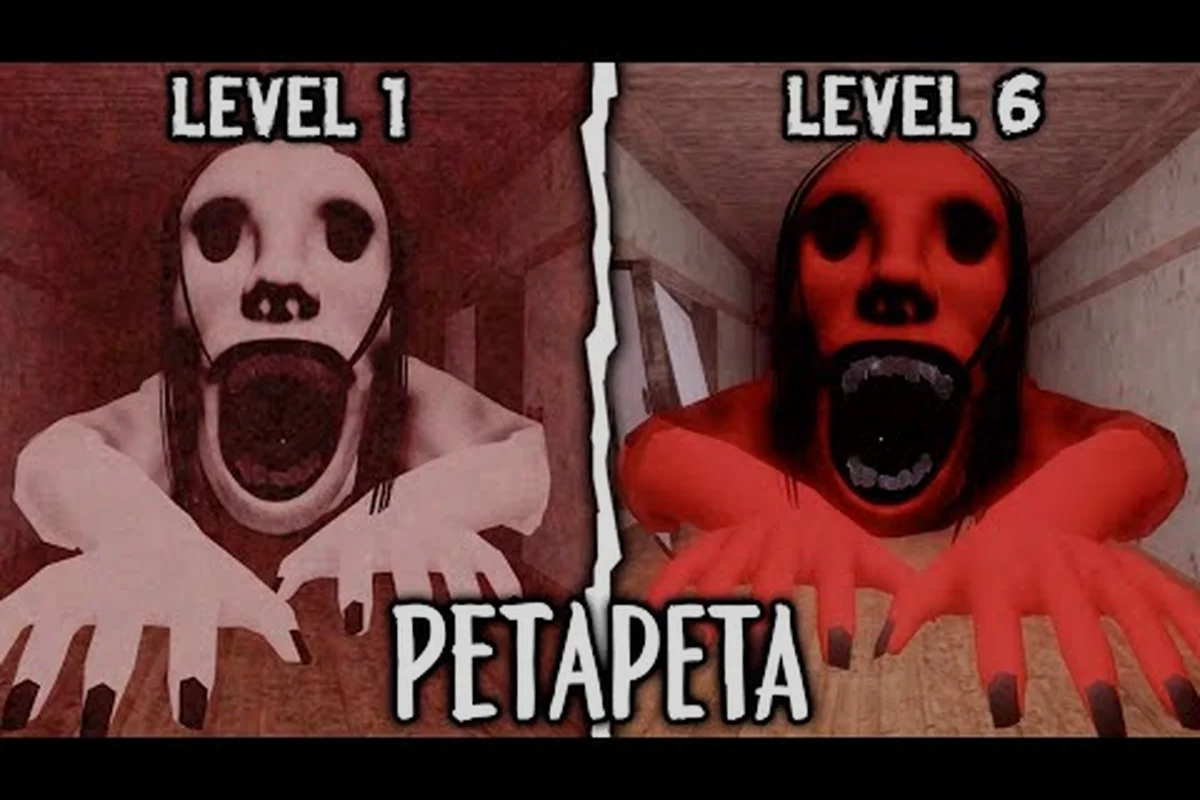
Understanding PETAPETA monster behavior is the difference between a clean escape and a wasted run, because the creature hunting you is not reacting to a fixed script. It reads distance, line of sight, and noise, then commits to a chase that changes as the stage progresses. Once you recognize those signals, every encounter stops feeling random.
This breakdown covers the full loop: how detection works, how chase behavior escalates across stages, where speed scaling kicks in, and which visual and audio cues tell you what the monster will do next. By the end you should be able to predict a pursuit instead of reacting to it.
How PETAPETA monster AI detects and commits to a target
The PETAPETA monster AI runs on a layered detection model rather than a single aggro radius. Each layer has its own trigger, and the creature only escalates to a full chase when enough layers agree that you are worth pursuing. That is why two players standing at the same distance can get very different reactions.
| Detection layer | Trigger condition | Line-of-sight required? | Resolution timing | Wall/corner protection | Escalates to full chase? |
|---|---|---|---|---|---|
| Proximity ring | Enter short radius around monster | No | Instant (single frame) | None — bypasses cover entirely | Yes, turns immediately |
| Sight cone | Enter forward-facing wedge | Yes, unobstructed line | Multi-frame check | Yes — breaking line cancels alert | Only after LOS passes across frames |
| Noise memory | Sprint, movement, or object interaction | No | Last to resolve, short decay window | Investigates last known position | Pulls off patrol path, not instant chase |
The three detection layers work like this, and the order in which they resolve matters more than any single radius value. The proximity ring checks first and resolves instantly, which is why it can flag you through a wall before the sight cone even gets a chance to confirm. The sight cone only escalates if its line-of-sight check passes across multiple frames, so ducking behind cover mid-cone actively cancels the alert rather than locking it in. Noise memory runs last and decays over a short window, meaning a sprint or an object interaction can pull the PETAPETA monster off its patrol path toward your last known position even after you have broken visual contact.
-
Proximity ring — a short radius around the monster that ignores walls and corners. Step inside it and the creature turns immediately, even if it cannot see you yet.
-
Sight cone — a forward-facing wedge that requires an unobstructed line. Breaking line of sight mid-cone cancels the alert instead of confirming it.
-
Noise memory — recent movement, sprinting, or interacting with objects leaves a short-lived trace the monster will investigate before returning to patrol.
Community testing suggests the proximity ring is the most punishing layer, because it bypasses cover entirely. Players who hug walls to avoid the sight cone often forget the ring exists and get caught from behind. The trap is that the two layers resolve in opposite directions: the sight cone rewards breaking line of sight, while the proximity ring punishes any attempt to circle the monster at close range, since walls and corners offer zero protection against it. A practical counter is to treat the ring as a hard no-go boundary and route your flank around its outer edge rather than cutting tight past the creature, reserving wall-hugging for the sight cone only. Because the ring resolves instantly while the sight cone must pass its line-of-sight check across multiple frames, a player who steps inside the ring and immediately breaks the cone still gets flagged — the instant layer wins the race.
The investigation phase matters more than the chase
Before a full pursuit begins, the monster enters an investigation state. It moves toward the last known position, pauses, and sweeps its sight cone. This window is your best chance to reposition, because the creature is not yet locked onto your actual location — only onto where you were.
If you break contact during investigation and stay quiet, the alert decays and the monster resumes patrol. If you keep moving loudly, you feed the noise memory and push it straight into a confirmed chase. Learning to freeze for two or three seconds during investigation is one of the highest-value habits in the game.
PETAPETA chase behavior: the three pursuit states
PETAPETA chase behavior is not a single mode. The AI moves through three distinct pursuit states, and each one has different movement rules, different pathing logic, and a different escape window. Confusing them is the most common reason players feel like the monster "teleports" or "never gives up."
| Pursuit state | Trigger | Movement rule | Escape window |
|---|---|---|---|
| Curious | Noise trace or partial sight | Slow, wanders toward last known point | Wide — break line and stay quiet |
| Tracking | Confirmed sight, target still visible | Direct pathing, ignores patrol route | Moderate — corners and doors help |
| Committed | Sustained contact or repeated noise | Shortest-path pursuit, cuts corners | Narrow — must break line for several seconds |
The jump from Tracking to Committed is the dangerous one. Once committed, the monster stops respecting its normal patrol boundaries and will follow you through doorways it would otherwise avoid. According to player reports, the committed state also disables the brief pause the creature normally takes at corners, which is why it suddenly feels faster.
Reading the transition cues
Each state change has a tell. In Curious, the monster's movement is loose and it frequently stops. In Tracking, it fixes its facing toward you and stops wandering entirely. In Committed, the animation tightens, the step cadence increases, and it no longer pauses at intersections.
If you see the creature stop pausing at corners, you are already in Committed. Stop trying to juke it with short turns and commit to breaking line of sight entirely — a long corridor with a door at the end is worth more than three quick corners.
PETAPETA monster stages and how difficulty scales
PETAPETA monster difficulty is tied directly to stage progression, but not in the simple "more health, more damage" way players expect. The AI itself changes: detection layers get more sensitive, investigation time shortens, and the committed state becomes easier to trigger. Later stages effectively give the same creature a better brain.
The stage-by-stage changes players have documented look roughly like this: in early stages the PETAPETA monster relies on a proximity ring and a narrow sight cone, giving you several seconds of sweeping investigation before it commits, so breaking line of sight is usually enough. By the mid stages, noise memory is added and the cone widens, meaning a sprint through a doorway now feeds the AI a location it remembers rather than forgets. In the late stages all detection layers run at once and the cone sweeps faster, collapsing that investigation window and making the committed chase state far easier to trigger.
| Stage band | Detection behavior | Investigation duration | Chase persistence |
|---|---|---|---|
| Early stages | Proximity ring only, narrow sight cone | Long — several seconds of sweeping | Gives up quickly after losing line |
| Mid stages | Ring plus wider cone, noise memory added | Moderate | Follows through doorways |
| Late stages | All layers active, cone sweeps faster | Short | Long pursuit, cuts corners aggressively |
The practical takeaway is that tactics which work in early stages quietly stop working later. Hiding behind the same crate that saved you in stage two will fail once the sight cone widens, because the AI now checks angles it previously ignored. If you want the full stage breakdown, the chapter and stage order guide maps which mechanics unlock where.
Why late-stage difficulty feels unfair
Late-stage difficulty spikes because multiple systems tighten at once. The investigation window shrinks, so you have less time to reposition. The sight cone widens, so cover becomes less reliable. And the committed state lasts longer, so a single mistake compounds.
None of these changes are individually dramatic, which is why the shift sneaks up on players. The fix is to re-learn your escape routes each time the stage band changes rather than relying on muscle memory from earlier areas.
PETAPETA monster speed: when and how it scales
PETAPETA monster speed is the stat players misread most often, because the creature does not simply move faster as stages advance. Base movement speed stays fairly consistent, and the perceived speed increase comes from three separate modifiers stacking on top of each other.
Those modifiers are: the Pursuit state bonus, which makes Committed movement faster than Tracking and Tracking faster than Curious; the Stage modifier, a modest chase-speed multiplier applied only during active pursuit in later stage bands; and Path efficiency, where the AI cuts corners in Committed state and covers ground more directly at identical raw speed. Each one is tracked separately by the PETAPETA monster AI, so a single stage transition can change two or three at once — which is why players often blame raw speed for what is actually a state change plus a shorter route.
-
Pursuit state bonus — Committed movement is faster than Tracking, which is faster than Curious. Most of the "it got faster" feeling is just a state change.
-
Stage modifier — later stage bands apply a modest multiplier to chase speed, applied only while actively pursuing.
-
Path efficiency — the AI cuts corners in Committed state, so it covers ground more directly even at identical raw speed.
That third factor is the sneaky one. The monster is not outrunning you in a straight line; it is taking a shorter route. Players who run wide arcs around obstacles lose ground because the AI hugs the inside of every turn.
Outrunning versus outmaneuvering
You cannot win a pure footrace against a Committed monster in later stages, and trying is how most chases end badly. What you can do is force the AI into inefficient pathing. Doorways, tight corners that require a full stop, and vertical transitions all cost the monster more time than they cost you.
The most reliable escape pattern is a deliberate loop: break line of sight, take a route the AI must path around rather than through, and use the investigation window to reset. Speed scaling punishes straight-line running and rewards route knowledge, which is why map familiarity matters more than reflexes.
Practical tactics for managing chase behavior
Theory alone won't save you once a chase starts — what matters is layering habits that exploit how PETAPETA's AI actually processes information at each stage band. Speed scaling changes the math: a Curious monster's patrol pace is slow enough that a walking player breaks the noise-memory threshold, but once it shifts into Tracking, that same walk speed no longer outruns the widened detection cone, so the tactic has to change with the stage. The habits below are ordered roughly by how early in a chase they apply, and each one targets a specific AI subsystem — noise memory, line-of-sight checks, or the investigation freeze timer — rather than relying on raw distance. Treat them as a sequence you drill in order, not a menu to pick from mid-panic.
-
Walk, don't sprint, near patrol routes. Sprinting feeds noise memory and can push a Curious monster straight into Tracking.
-
Break line of sight before you break distance. Distance alone does not end a chase; losing sight does.
-
Use the investigation freeze. Two or three seconds of stillness during investigation often ends an alert entirely.
-
Learn one loop per area. A single reliable escape circuit beats ten improvised routes.
-
Re-test your old hiding spots after each stage band change. Cover that worked earlier may now be inside the widened cone.
If you are playing on a higher difficulty setting, the same rules apply but with tighter windows — the hard mode guide covers how the AI parameters shift when difficulty is raised, including the shorter investigation timers that catch experienced players off guard.
Building a mental model instead of memorizing tricks
The players who handle chases best are not memorizing individual tricks. They build a working model of the AI: what each state looks like, what triggers the next one, and what the monster can and cannot perceive. Once that model is in place, new areas and new stage bands stop being surprises.
A useful exercise is to deliberately trigger a Curious state and watch the monster investigate without ever letting it reach Tracking. Doing this a few times in a safe area teaches you the timing of the investigation window far better than any written description.
How monster behavior connects to the wider roster
Chase logic is shared across the roster, but each creature applies it differently — some lean on the proximity ring, others rely on a wide sight cone, and a few have unique modifiers layered on top. Understanding the shared framework makes individual monsters much easier to read, and the full monster roster breakdown lists which creatures deviate from the baseline.
That baseline is worth internalizing first. Once you know how a standard chase escalates from Curious to Committed, spotting the exceptions becomes straightforward: a monster that skips investigation entirely, or one whose sight cone does not shrink when you break line, stands out immediately.
The same detection model also shapes how monsters behave against multiple players, which changes the calculus in group settings. Pursuit targets can swap, and noise from one player can pull a creature away from another — a dynamic worth understanding before jumping into player-versus-monster PVP matches, where baiting chases is a legitimate tactic.
Frequently Asked Questions
Can you lose a committed monster by breaking line of sight once?
No. A single break is not enough in the Committed state, because the AI keeps pursuing your last known position for several seconds. You need to break line and stay hidden long enough for the alert to decay, which usually means putting a doorway or a full corner between you rather than just ducking behind cover.
Does PETAPETA monster speed increase with every stage?
Not directly. Base speed stays fairly stable, and the increase you feel comes from a combination of the Committed state bonus, a modest late-stage multiplier, and more efficient corner-cutting pathing. The AI covers ground faster because it takes shorter routes, not because its raw movement value climbs steadily.
What triggers the investigation phase instead of a full chase?
Partial detection triggers investigation: a noise trace, a brief glimpse at the edge of the sight cone, or movement near the proximity ring without a clean line of sight. A confirmed, sustained sight line skips investigation and pushes the monster straight into Tracking, which is why staying out of direct view matters so much.
Is hiding still viable in late stages?
Yes, but the spots change. Late-stage sight cones widen and sweep faster, so cover that worked early may now sit inside the detection wedge. Re-test your usual hiding places whenever the stage band shifts, and favor cover that blocks the cone entirely rather than partially.
Do different monsters follow the same chase rules?
They share the same framework — proximity ring, sight cone, noise memory, and the three pursuit states — but individual creatures weight those layers differently. Some rely heavily on the ring, others on a wide cone, and a few add unique modifiers. Learn the baseline first, then note the exceptions.
The short version
PETAPETA monster behavior rewards players who read state changes instead of reacting to raw speed. Detection runs on three layers, chases escalate through Curious, Tracking, and Committed, and the speed you feel is mostly a combination of state bonuses and smarter pathing rather than a flat stat increase. Stage bands tighten the investigation window and widen the sight cone, so tactics need refreshing as you progress.
The core habit to build is simple: break line of sight, stay quiet during investigation, and learn one reliable escape loop per area. Do that consistently and the AI stops feeling unpredictable — it starts feeling like a system you can play around.