
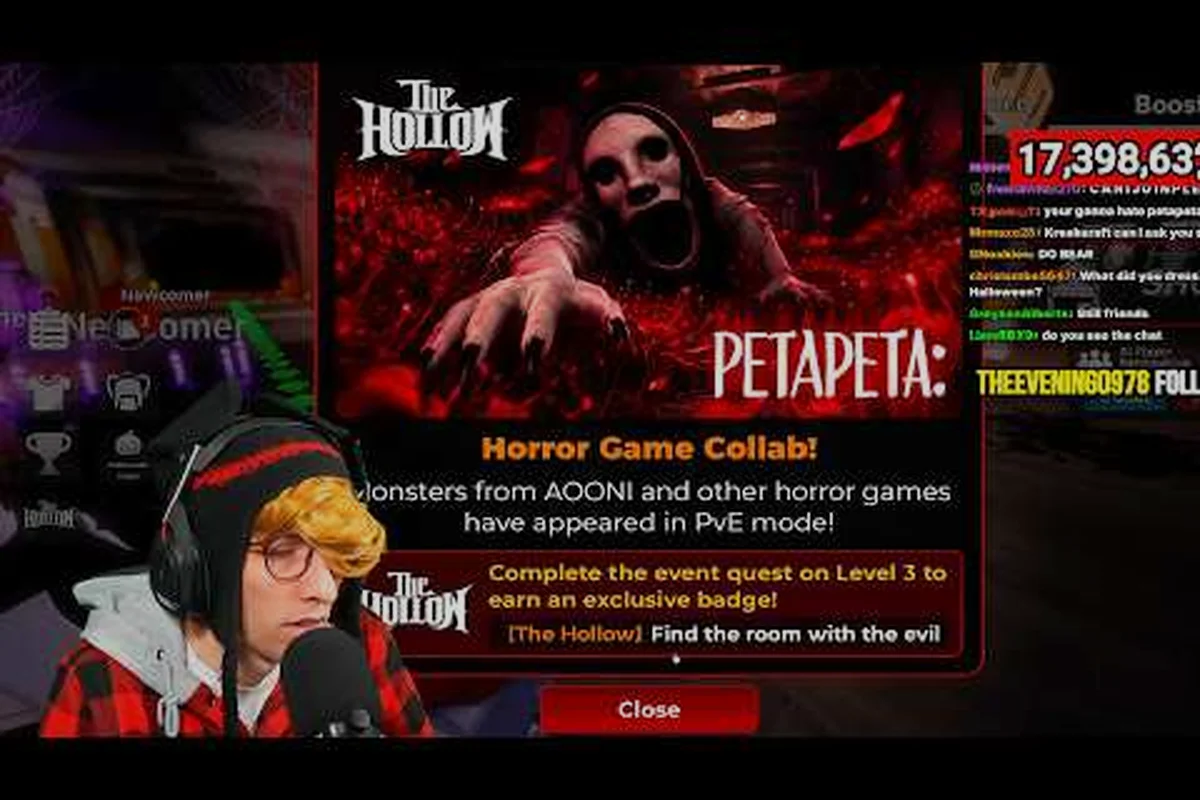
The PETAPETA collaboration with Inu_productions is the single most important partnership in the series' history, and it directly shaped what became School of Nightmares. Understanding who built what, and why the studio keeps bringing outside creators in, tells you a lot about how the game actually plays.
Horror games rarely credit their partners clearly, so fans end up guessing which studio made which room. This breakdown separates the confirmed PETAPETA collaborators from the rumors, explains what each partnership contributed, and shows how to spot a partner's fingerprints in the finished build.
What the Inu_productions partnership actually contributed
The PETAPETA Inu productions relationship is not a marketing crossover — it is a production partnership that touched level design, creature behavior, and the pacing of the early game. According to community reporting and the studio's own dev notes, Inu_productions was brought in during the middle of development, when the core chase loop already worked but the level layouts felt flat.
That timing matters. A partner joining mid-production usually inherits a working engine and a set of unfinished ideas, which is exactly what happened here. The Inu_productions team reportedly focused on sightline design — how far a player can see down a corridor before the monster becomes visible — and on door placement that forces a decision rather than a reflex.
Where the partner's work shows up first
The clearest evidence of the partnership appears in the first three levels, where the corridors are narrower and the escape routes branch earlier than in later stages. Players who have run the full walkthrough often note that the opening stretch feels more deliberately authored than the mid-game, and that difference is largely the Inu_productions contribution.
| Contribution area | What changed | Where you notice it |
|---|---|---|
| Sightline design | Shorter visible distance before a threat appears | Levels 1 to 3 corridors |
| Door placement | Forced choice points instead of dead ends | Early escape routes |
| Creature pacing | Delayed first appearance to build tension | Opening minutes of a run |
| Room readability | Landmarks that help you orient fast | Puzzle-adjacent hallways |
| Audio cues | Footstep layering tied to distance | Chase sequences |
The audio work is the least discussed but most felt. Community reports describe the footstep layering as the reason early chases feel claustrophobic even when the monster is still several rooms away, and that layering was tuned alongside the sightline changes rather than added afterward.
How to tell which PETAPETA collaborators touched which part of the game
Tracing a specific room back to a specific partner is harder than it sounds, because studios rarely publish a per-level credit list. What you can do is compare the design language across the game and group rooms by their habits — how they handle corners, how generous they are with hiding spots, and whether they favor verticality or flat corridors.
The table below groups the confirmed and reported PETAPETA collaborators by the design signature players most often associate with them — for instance, Inu_productions' reported level layout work shows up as tight corridors with early branch points, while the core studio team's monster AI reads as predictable pursuit states with fair escape windows. Treat the signatures as patterns rather than proof, since a single room can carry two influences at once: a claustrophobic corridor may reflect Inu_productions' sightline habits while its stinger placement and distance-based audio cues point to the sound contributors. Where a signature is ambiguous, cross-check it against patch history — community testers' balance tuning is visible in difficulty spikes that soften after updates, which helps separate a deliberate design choice from a later fix.
| Partner or contributor | Reported role | Design signature |
|---|---|---|
| Inu_productions | Level layout and sightlines | Tight corridors, early branch points |
| Core studio team | Monster AI and chase logic | Predictable pursuit states, fair escapes |
| Audio contributors | Sound design and stingers | Layered footsteps, distance-based cues |
| Art collaborators | Creature and environment art | High-contrast silhouettes in low light |
| Community testers | Balance and difficulty tuning | Difficulty spikes that soften after patches |
Reading the design signature in a single room
Pick any room with two exits and watch how the monster enters it. If the creature commits to one path early and gives you a clean window to slip past, you are looking at core-team chase logic. If the room instead forces you to commit before you can see the threat, that is the Inu_productions habit of designing around incomplete information.
This is also why the game mechanics overview stresses that correct answers raise monster anger — the layout and the AI are tuned together, so a room that looks generous can still punish a slow decision. The two-exit room is where that coupling becomes visible: the Inu_productions-authored geometry gives you a wide-looking escape lane, but the core-team chase logic re-reads your position the moment a puzzle answer registers, and the anger spike shortens the monster's commit window on the very path you were counting on. Read the room as a single design signature rather than two separate systems — the sightline, the exit spacing and the anger threshold were balanced as one unit, which is exactly the kind of shared authorship the PETAPETA collaboration is built on.
The School of Nightmares connection and why it matters
School of Nightmares is the project most often named when people discuss the PETAPETA collaboration, and for good reason: it is where the partnership's design philosophy became visible to players rather than staying behind the scenes. The nightmare-hotel framing gave the team a reason to build rooms that repeat with variations, which is a layout problem Inu_productions had already solved in earlier work.
That repetition-with-variation structure is why the same hallway can feel different on a second pass. Small changes to door states, lighting, and monster entry points create the illusion of a living space without requiring an entirely new level each time.
What the collaboration did not do
It is worth being precise about the limits. The partnership did not replace the core studio's monster AI, did not rewrite the puzzle logic, and did not change the ending structure. Players who assume every memorable moment came from an outside studio are giving away credit that belongs to the in-house team, particularly around chase behavior and the fairness of escape windows.
If you are working through the puzzle rooms and wondering why some sequences feel more readable than others, the puzzle guide breaks down the solve order — and you will notice the clearest hints sit in rooms with the strongest layout work.
Comparing the partnership eras side by side
The series has gone through distinct phases, and each phase has a different mix of in-house and outside contributions. Lining them up makes the pattern obvious: the more collaborators involved, the more the game leans on atmosphere and layout, while the solo-developed stretches lean harder on raw chase difficulty.
| Era | Collaboration level | Dominant design focus | Player experience |
|---|---|---|---|
| Pre-partnership build | In-house only | Chase logic and monster AI | Punishing, less readable |
| Inu_productions phase | One major partner | Sightlines, doors, audio layering | Tense but fair |
| School of Nightmares | Partner plus art and audio help | Atmosphere and repeatable rooms | Cinematic, replayable |
| Post-launch tuning | Community feedback driven | Balance and difficulty curves | Smoother spikes |
Why the middle era is the fan favorite
Ask longtime players which stretch of the game feels best and most point to the Inu_productions phase. The reason is not nostalgia — it is that the partnership arrived at the exact moment the game needed structure rather than more scares. Adding tension to a game that already had plenty was less valuable than making that tension legible.
That is a useful lesson for anyone studying how small studios collaborate, and it maps directly onto the PETAPETA collaboration timeline: the Inu_productions phase ranks as the fan favorite precisely because it patched the weakest layer — pacing and readability of scares — instead of stacking another monster or jumpscare on top. The same logic explains why later PETAPETA collaborators who chased spectacle, adding louder set pieces without fixing the underlying structure, are remembered less fondly than the Inu_productions era that made the existing tension legible.
Practical ways to study the collaboration while you play
You do not need developer commentary to see the PETAPETA collaboration at work; the Inu_productions and School of Nightmares design languages surface on their own once you know where to look. A few deliberate habits make the differences obvious within a couple of runs and cost you nothing in progress. Treat each session as a small field study rather than a race to the exit: pick one variable per run, hold everything else steady, and log what changed. Because the two studios split responsibilities — Inu_productions steering sightlines and forced-choice doors, School of Nightmares shaping repeatable-room logic — isolating a single variable tells you which partner shaped that moment instead of blurring both signatures together.
-
Walk the first level slowly on a fresh run and count how many seconds pass before the monster is visible — that number is the sightline budget the partner designed around.
-
Note every door that forces a choice rather than simply blocking a path, since forced-choice doors are the clearest Inu_productions signature.
-
Listen for footstep layering during a chase and judge whether the sound tells you the distance accurately; accurate audio was a stated goal of the partnership.
-
Compare a room on your first and second visit to see which elements changed, because repeatable-room design was the School of Nightmares contribution.
-
Check patch notes after a balance update to see whether a difficulty spike you struggled with was softened, which tells you the community-testing loop is still active.
Using survival habits to test layout quality
The survival tips guide recommends building a repeatable escape routine rather than improvising, and that advice doubles as a diagnostic tool. If a room punishes a well-planned routine, the layout is doing its job. If it punishes you for hesitating at a door you could not see past, that is the incomplete-information design working exactly as intended.
Players new to the game sometimes mistake this for unfairness, but the beginner guide reframes it as onboarding: the first few deaths are layout lessons, not skill checks, because each early room is built to teach one readable cue—a door frame, a floor seam, a light pool—before the layout starts withholding it. That distinction matters in the PETAPETA collaboration rooms, where Inu-produced set pieces dress the same geometry in new art; a player who learned the cue in the base layout can still read it under the collaboration skin, while one who memorized the skin alone will hesitate. Treating early deaths as lessons keeps that transfer working instead of turning every reskin into a fresh skill check.
How the studio chooses and manages partners
The pattern across the series suggests a fairly consistent selection rule: bring in a partner who has already solved the specific problem the core team is stuck on, and give them a narrow scope. Inu_productions was chosen for layout and sightlines, not for monster design or narrative, and the scope stayed there.
That narrow-scope approach explains why the collaboration reads as coherent rather than patchwork. When a partner owns one layer completely, their work blends into the whole instead of announcing itself as a separate style. Inu_productions' layout and sightline work is a clear case: because the studio handled spatial framing while the core team retained monster design and chase logic, the resulting levels show no visible seams, and the chase sequences were left untouched rather than reworked. This division is also why post-launch difficulty patches could tune balance without destabilizing the level geometry — the two layers stayed independent, so adjustments to one never forced a rebuild of the other.
| Selection criterion | Why it matters | Evidence in the build |
|---|---|---|
| Proven solution to an existing problem | Avoids redesigning working systems | Chase logic left untouched |
| Narrow, defined scope | Prevents stylistic clashes | Consistent monster behavior |
| Overlap with the core team's tools | Keeps iteration fast | No visible seams in levels |
| Willingness to tune after feedback | Keeps balance healthy | Post-launch difficulty patches |
What this means for future team-ups
Any future PETAPETA collaboration will likely follow the same shape: a partner brought in to fix one weak layer, credited quietly, and folded into the existing systems rather than layered on top. Fans hoping for a dramatic crossover should temper expectations — the studio's track record favors structural help over spectacle.
That is also why rumors about large external studios taking over major content rarely pan out. The evidence in the build points to small, targeted partnerships, and the results support continuing that way. The pattern shows up across the credited PETAPETA Inu productions: the partner's name surfaces in a single discipline — a rigging pass, a background-art batch, an audio mix — while the overall direction, script, and character work stay in-house. That division of labor is deliberate, since a full external takeover would mean surrendering the continuity that lets recurring PETAPETA collaborators slot into existing scenes without rework. Targeted help also keeps the credit line short, which matters when a partner is brought in for one weak layer and then folded back out.
Frequently Asked Questions
What is the PETAPETA collaboration with Inu_productions?
It is a production partnership rather than a marketing crossover. Inu_productions was brought in mid-development to improve level layout, sightlines, door placement, and audio layering, and that work is most visible in the tighter corridors and forced decision points of the opening levels.
Which PETAPETA collaborators are confirmed?
The core studio team handled monster AI and chase logic, Inu_productions handled layout and sightlines, and separate audio and art contributors worked on sound design and creature visuals. Community testers also shaped balance through feedback, though they are not credited as a studio partner.
Did the collaboration change the monster AI?
No. The core team kept control of chase behavior and pursuit states throughout, which is why monster behavior stays consistent across the whole game. The partnership focused on the spaces the monster moves through, not on how it decides to move.
How can I spot Inu_productions work while playing?
Look for rooms where you must commit before you can see the threat, and for doors that force a choice instead of simply blocking a path. Accurate, distance-based footstep audio during chases is another reliable signature of the partnership's work.
Will there be more PETAPETA team-ups in the future?
The PETAPETA collaboration story is really a story about restraint. Inu_productions was brought in to fix layout and sightlines, stayed inside that scope, and left the chase logic to the team that built it — which is why the partnership improved the game without making it feel assembled from parts. When you next walk a narrow corridor and feel the tension rise before anything appears, that is the collaboration doing its job.