Omochi Studio is the small Roblox team that made PETAPETA, and understanding who they are explains a lot about how the horror game actually plays. Knowing the PETAPETA developer behind the scares changes how you read its design choices, its trailer, and its update rhythm.
Who Omochi Studio actually is
Omochi Studio is a compact independent group working on the Roblox platform, and that scale is the single most useful fact about them. Small teams ship differently: they iterate fast, they lean on a tight art direction instead of raw asset volume, and they tend to build tension through rules rather than expensive set pieces. For a horror game, that constraint is a feature, not a limitation.
The name itself fits the tone. "Omochi" reads as a soft, almost cute word, which sits in deliberate contrast with the game's subject matter. That contrast is a recurring habit in Japanese horror design, where a friendly surface makes the eventual scare land harder. The studio leans into this on purpose, and you can feel it in everything from the title screen to the monster's silhouette.
Because the team is small, the credits list is short and the roles blur. The same people who write the chase logic also tune the audio cues and answer support messages. That overlap is why PETAPETA feels coherent: there is no committee smoothing the edges off the scary parts. Community reports consistently describe the game as "focused," and a lean team is the most likely reason.
That overlap is also the clearest way to see the small-team philosophy in action, because the same handful of people own the full pipeline from code to sound. If you want to see how that translates into concrete systems, the breakdown of PETAPETA development and design walks through the programming and audio decisions in detail, including how the chase logic and sound cues were tuned together rather than handed off between separate departments. Reading it alongside the credits makes the "focused" reputation easier to explain: fewer handoffs mean fewer compromises, and the scary parts survive intact from idea to build.
The Omochi Studio games lineup and where PETAPETA sits
Omochi Studio games are not a sprawling catalog. The studio's identity is built around a narrow horror focus rather than a wide genre spread, and PETAPETA is the title that defines the public face of the label. That focus matters for players because it means the team's attention is not split across five unrelated projects.
| Project type | What it tells you about the studio | Player takeaway |
|---|---|---|
| PETAPETA (flagship horror) | Core identity, most updates and events | Expect the most polish and content here |
| Seasonal event content | Rapid iteration inside the same engine | Events arrive faster than full sequels |
| Experimental prototypes | Testing chase and puzzle ideas | Mechanics may graduate into the main game |
| Collaboration work | Partnering with other Roblox creators | Cross-over content appears periodically |
The practical read is simple: if you enjoy PETAPETA, you are enjoying the studio's main creative outlet, not a side project. That is why the game receives steady event support instead of being left to sit. Players who track the official channel and trailers tend to notice that new content is teased well before it lands, which is a habit of a team that plans ahead on a small budget.
The lineup also explains the game's mechanical consistency. Because the studio reuses its own chase and puzzle framework across content drops, learning one mode teaches you the vocabulary for the next. There is no jarring shift in how the monster behaves between a standard run and a seasonal event.
Who made PETAPETA: the roles behind the game
Answering who made PETAPETA is less about naming individuals and more about understanding the role structure. Like most Roblox horror projects, the studio splits work into a handful of functions, and each one leaves a visible fingerprint on the final game.
Design and level layout
The design lead decides where walls go, how long a corridor runs, and where the monster is allowed to appear. In PETAPETA, that shows up as rooms that look open but funnel you toward a single exit. The layout is doing the scaring before the creature even spawns.
Programming and chase logic
The programmer builds the pursuit states, the detection rules, and the timing windows that decide whether you escape. Small studios usually have one person owning this, which produces consistent behavior: the monster commits to a target the same way every run, so skilled players can learn it.
Audio and atmosphere
Audio is where a lean team gets the most value per hour. Layered ambient tracks, a rising sting when the monster closes in, and silence used as a warning all cost far less than high-fidelity models but hit harder. Community reports frequently credit the sound design as the scariest part of the game.
Art, UI, and community
The remaining work covers the visual identity, the minimal interface, and the person answering messages. The restrained UI is a deliberate choice: fewer on-screen elements mean fewer places for your attention to hide. That philosophy carries straight into the art and UI row of the table above — clean HUD, strong silhouettes, nothing cluttering the screen — and it is why a PETAPETA chase reads through shape and sound rather than busy overlays. It also explains the community row: the same small team that draws the HUD is the one reading your bug report, so a fix for a confusing corridor or a mistimed chase state can ship in the next patch instead of waiting in a support queue.
| Role | Visible impact in-game | How players notice it |
|---|---|---|
| Design / layout | Corridor funnels, dead ends, sightline breaks | "This room feels wrong" |
| Programming | Consistent chase states and timing | Predictable monster behavior |
| Audio | Stings, ambience, silence cues | Jumping before you see anything |
| Art / UI | Clean HUD, strong silhouettes | Nothing clutters the screen |
| Community | Patch notes, support replies | Fast responses to bug reports |
That last row is worth stressing. The people who made the game are also the people who read your bug report, which is unusual at larger studios and shapes how quickly fixes ship. Concretely, the same small team that tunes PETAPETA's chase-state timing is the one triaging reports about a mistimed chase or a corridor that reads as a dead end, so a fix can land in the next patch rather than sitting in a support queue behind a publisher, a QA department, and a community manager who never touched the build. That direct line between the Art/UI and Community rows of the table above is why patch notes tend to name the exact room or chase state that changed.
How the studio's scale shapes PETAPETA's design
A small team cannot out-render a AAA horror game, so Omochi Studio competes on rules instead of spectacle. The result is a game where the tension comes from a simple, learnable system that punishes impatience. Once you understand the rule, the fear changes from confusion to pressure, and pressure is more sustainable across repeated runs.
This is why the game rewards route knowledge so heavily. Because the monster's behavior is consistent, memorizing a level's layout converts a terrifying room into a solvable problem. The studio effectively trades graphical budget for replayable tension, and the trade works. You can see the same logic applied to the wider systems in the game mechanics overview, which maps how the explore-puzzle-escape loop feeds back into itself.
The scale also explains the update cadence. Small teams ship smaller, more frequent patches rather than one massive annual drop, so balance changes arrive while the meta is still forming. That keeps the game from calcifying around a single dominant strategy.
Reading the studio through its trailer and public presence
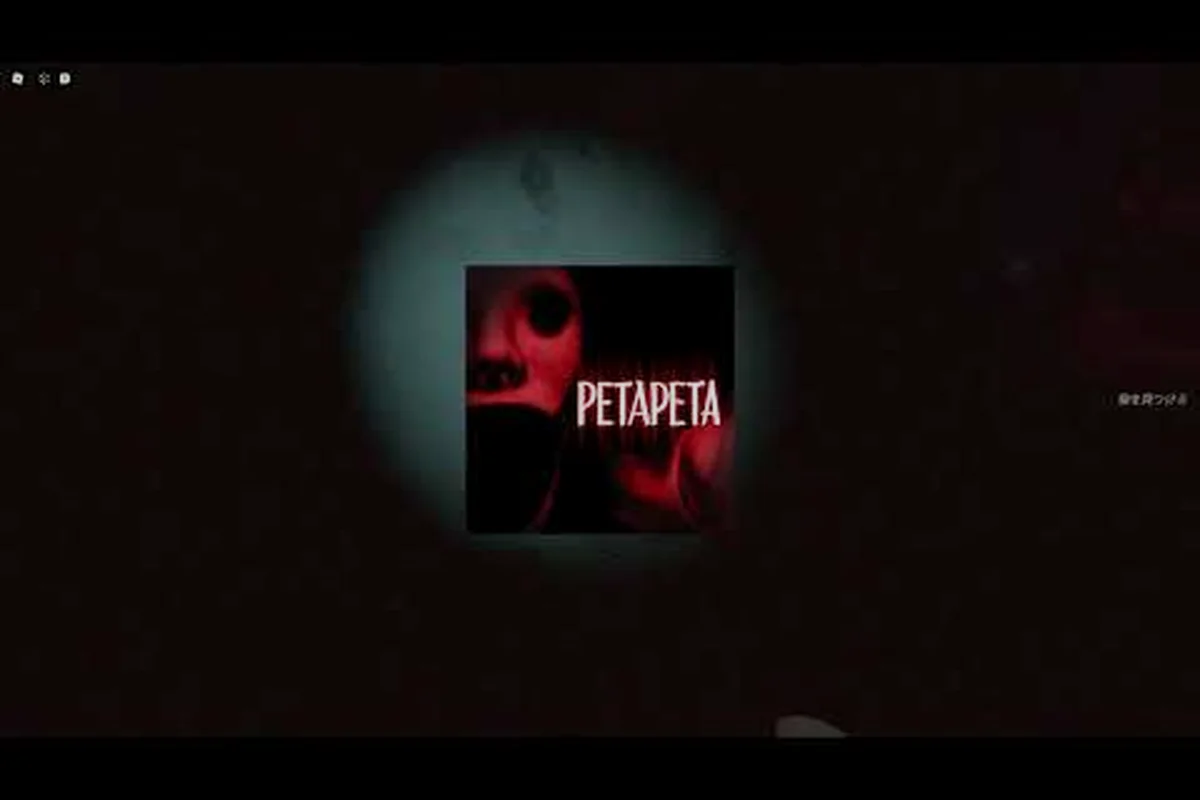
The PETAPETA trailer is the clearest public statement of what the studio values. Rather than showing a montage of features, it builds a mood: slow establishing shots, a held silence, then a cut. That structure tells you the team thinks of the game as an atmosphere first and a mechanic second.
Public presence follows the same restraint. Announcements tend to be short, visual, and light on promises. When the studio does communicate, it usually leads with what is shipping rather than what might ship someday, which is a habit born from having a small team that cannot afford to overcommit.
| Signal | What it suggests | Why it matters to you |
|---|---|---|
| Trailer pacing | Confidence in atmosphere over features | The scares are intentional, not accidental |
| Short announcements | Avoids overpromising | Fewer letdowns after updates |
| Visual-first posts | Art direction is a priority | Consistent look across content |
| Limited interviews | Team prefers the work to speak | Expect few behind-the-scenes reveals |
For players who like to predict what comes next, this pattern is genuinely useful. A studio that teases visually tends to hint at new monsters and modes through imagery long before a written roadmap appears. The PETAPETA trailer's held silence and abrupt cut are themselves signals — the kind of editing rhythm that usually precedes a monster reveal or a mode shift, so rewatch the pacing rather than the text. Because Omochi Studio leads with what is shipping, as the table's "short announcements" row notes, any sudden uptick in visual-first posts is a stronger early indicator of incoming PETAPETA content than a formal announcement would be.
The community side of the Omochi Studio Roblox footprint
Omochi Studio Roblox presence is inseparable from its player base, because on Roblox the group page, the game page, and the community all live in the same place. The studio's official group functions as the hub where announcements, event news, and player discussion converge, and its member count is one of the better public signals of how healthy the game's population is.
That proximity has downsides as well as upsides. Feedback arrives fast and unfiltered, which is great for catching bugs and rough for morale. The studio's response has been to keep communication narrow and factual rather than reactive, a pattern that shows up in how patch notes are written. If you want to see how players organize around the game, the PETAPETA community and group guide covers where the discussion actually happens and how members use the group page.
One underrated effect of a small studio on Roblox is that the developers are visible. Players recognize the same names in support threads across months, which builds a kind of familiarity that larger studios cannot replicate. That visibility is also a vulnerability: every delay is public, and every fix is credited or blamed in real time.
Comparing Omochi Studio to typical Roblox horror teams
Putting the studio next to the broader Roblox horror scene makes its choices clearer. Most teams in the space either chase trend-driven content or lean hard on jump-scare volume. Omochi Studio sits closer to the restraint end of that spectrum.
| Dimension | Typical Roblox horror team | Omochi Studio approach |
|---|---|---|
| Content strategy | Frequent genre pivots | Narrow, consistent horror focus |
| Scare method | Loud, frequent jump scares | Built tension plus selective scares |
| Update style | Large infrequent drops | Smaller, steadier patches |
| Communication | Heavy social posting | Sparse, visual-first announcements |
| Design priority | Feature count | Rule clarity and atmosphere |
The trade-off is real. A narrow focus means the studio is less likely to surprise you with an entirely different genre, and the restrained scare design means players who want constant noise may find the pacing slow. What you get in exchange is a game whose rules stay stable enough to actually master, which is why the community skews toward players who replay levels rather than one-and-done tourists.
That stability is also why difficulty conversations in the community stay productive. When the underlying system does not shift every patch, players can compare notes on the same problem, and the game modes overview becomes a genuinely useful reference instead of a snapshot of last month's balance.
Frequently Asked Questions
Who made PETAPETA?
PETAPETA was developed by Omochi Studio, a small independent team working on the Roblox platform. The studio handles design, programming, audio, art, and community support in-house, which is why the game's systems feel tightly connected and why patches tend to arrive in small, frequent batches rather than large annual drops.
What other Omochi Studio games are there?
The studio's public identity centers on PETAPETA and its seasonal event content rather than a wide catalog. Because the team is small, most of its output flows back into the flagship horror title, including limited-time events and mode additions, so players should expect depth in one game rather than breadth across many.
Is Omochi Studio a large Roblox developer?
No. It is a compact team, and that scale is visible in the game's design priorities. Instead of competing on graphical volume, the studio builds tension through clear rules, deliberate level layout, and layered audio, which is a strategy that suits a small group shipping frequently on Roblox.
Why does PETAPETA feel different from other Roblox horror games?
The difference comes from restraint. The studio uses selective scares, minimal on-screen UI, and consistent monster behavior instead of constant noise. That combination produces pressure rather than shock, and it means the game stays tense across repeated runs once you have learned the level layouts.
How does the studio communicate with players?
Communication is sparse and visual-first, typically through short announcements and trailer drops rather than long written roadmaps. The team also answers support messages directly, so bug reports often reach the same people who built the system, which shortens the gap between a reported issue and a shipped fix.
What the studio profile tells you as a player
Omochi Studio is best understood as a focused small team rather than a faceless Roblox label, and that framing explains nearly everything about PETAPETA: the consistent chase behavior, the restrained interface, the audio-led scares, and the steady trickle of event content. The studio's size limits its scope but sharpens its identity, and the game is a direct product of that trade.
For players, the practical value is predictive. Knowing how the PETAPETA game studio works tells you what to expect from future updates, why the monster behaves the same way every run, and why the community's difficulty discussions stay coherent across patches. The creators behind the game are visible, reachable, and working on a narrow brief, which is a good position for a horror title to be in.