
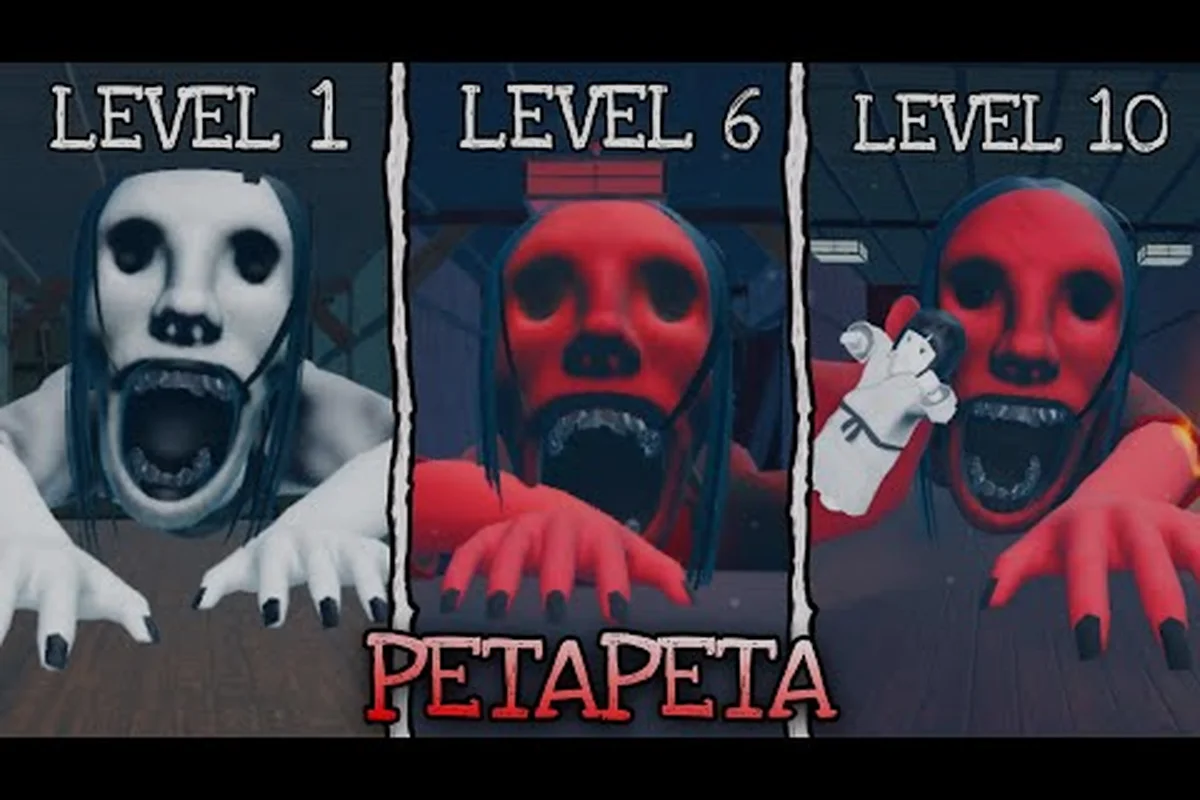
The most persistent PETAPETA fan theory argues that the hotel never existed and the whole chase is a memory loop, and the endings give that reading real weight. If you have finished a run and still feel like you missed something, you probably did, because the game hides its story in notes, posters, and badge text rather than cutscenes.
This breakdown collects the strongest PETAPETA theories, walks through what each PETAPETA story ending actually shows, and separates clues with real support from wishful thinking. A full PETAPETA story recap sits underneath so you can follow the arguments even if your last run was months ago.
The PETAPETA Story Recap You Need Before Theorizing
Any honest discussion of PETAPETA hidden lore starts with what the game states plainly, because most theories only work if you get the baseline right. The setup is simple: you enter a decaying hotel, a creature pursues you floor by floor, and the notes you collect describe previous guests who never left. Everything else is interpretation.
The community consensus, reported by players across discussion threads, is that the game runs on a nine-level structure with a final confrontation layered on top. Each level carries a thematic label, and those labels matter more than most first-time players realize.
| Story Element | What the Game Shows | What It Implies |
|---|---|---|
| The hotel | A fixed, looping location with repeating rooms | A place outside normal time |
| The creature | Persistent pursuer that reacts to your actions | A warden, not a random monster |
| The notes | Fragments from past guests | Previous failed runs |
| The badges | Collectibles tied to specific events | Memory markers |
| The ending choice | A final decision at the exit | Player authorship of the loop |
The badge system is the piece most players skip, and it is also where the strongest clues live. Badges are not cosmetic; several of them reference guests by name and describe how those guests died, which turns a collectible into a witness statement.
If you want the plain-language version of the plot without the theory layer, the full PETAPETA story and lore breakdown covers the sequence of events in order. Read that first if the names in the notes still blur together, then come back here for the arguments.
The Three Major PETAPETA Fan Theories Ranked
Not every PETAPETA fan theory deserves equal weight, so it helps to rank them by how much in-game evidence actually supports each one. The ranking below reflects community discussion plus what the game itself lets you verify on a replay.
Theory One: The Memory Loop
This is the dominant reading, and it explains the most details with the fewest assumptions. Under the memory loop theory, the protagonist is not a new guest at all but a previous guest repeating a failed escape, and the hotel resets each time the creature catches you.
The supporting evidence is strong. Notes describe rooms you have already seen, the repeating room layouts across levels suggest a constructed space rather than a real building, and the creature's behavior changes based on what you have already learned, which reads like a warden testing recall rather than a predator hunting prey.
Theory Two: The Curse Transfer
The curse transfer theory argues that the haunting is not tied to the building but to a person, and that the protagonist inherits it by surviving. This reading leans on the badge text that describes the curse moving between locations, which several players have pointed out matches the way the game's events shift setting.
It is a compelling theory because it explains why the ending feels unresolved, and it reframes the entire PETAPETA story recap: if the curse moves with the survivor, then escaping the hotel is not victory, it is transmission. That single inversion turns the protagonist's survival into the next haunting's origin, which is why the theory maps so cleanly onto the badge text describing the curse relocating between places. It also gives the multiple endings a shared spine — whichever route the player takes, the survivor walks out carrying the curse, so the epilogue reads as setup rather than closure.
Theory Three: The Author Reading
The weakest but most interesting theory treats the whole game as a story being written by one of the guests. Under this reading, the notes are drafts, the badges are chapter markers, and the ending choice is the author deciding how the book finishes.
Support is thin, mostly limited to the poster text that references an unpublished manuscript. Still, it is the theory that best explains why the game gives you a choice at the end at all, which the other two readings struggle with.
| Theory | Evidence Strength | Explains the Ending Choice? | Community Support |
|---|---|---|---|
| Memory loop | Strong | Partially | Very high |
| Curse transfer | Moderate | Yes | Moderate |
| Author reading | Weak | Yes | Low but growing |
Reading the PETAPETA Hidden Lore in Notes and Posters
The notes are the closest thing this game has to a narrator, and they reward slow reading far more than fast collection. Most players grab a note, skim it, and move on because the creature is closing in, which is exactly the design pressure the developers built around.
What makes the notes worth a second pass is that they contradict each other. Two notes describe the same night differently, and one note is dated after the guest it describes supposedly died. According to community reports, this contradiction is not a translation error; it appears consistently across languages.
The poster text in the lobby areas carries similar weight. Posters advertise events that never happened in the hotel's stated timeline, and one poster lists a room number that does not exist on the map. These are the details that turn a haunted-house premise into something more deliberate.
For a full inventory of these environmental details, the PETAPETA secrets and easter eggs guide catalogs the ones players have confirmed, including a few that only appear on a second playthrough. The reason second runs matter is mechanical, not just completionist: certain note and poster variants seem gated behind progression flags, so a detail that reads as background noise on run one becomes a dated contradiction on run two. Cross-referencing those late-appearing variants against the room-number poster and the mismatched death date is where most PETAPETA story ending theories actually begin, because the contradictions only resolve once you have both versions side by side.
Practical habits for lore hunting: build a note log that records, for each entry, the room it was found in, the in-game date on the note, and the progression flag active when it spawned — because the mismatched death date and the phantom room-number poster only become evidence once you can line them up chronologically. Treat the badge descriptions as a third text layer alongside notes and posters; some ending-theory threads on the community boards trace back to a badge whose unlock popup text and menu description disagree, which mirrors the same contradiction pattern the notes use. When a room repeats, log the order it reappears in rather than the room itself, since sequence is the variable that separates a genuine PETAPETA multiple-endings clue from ambient set dressing.
-
Read every note twice, once for content and once for the date line
-
Screenshot posters before leaving a lobby, since some do not respawn
-
Check badge descriptions in the menu, not just the unlock popup
-
Note which rooms repeat and in what order, because the sequence is a clue
PETAPETA Multiple Endings and What Each One Means
The PETAPETA multiple endings structure is where the theories either survive or collapse, because the game does not label its endings and does not tell you how many exist. Players have documented at least three distinct outcomes, and the differences are subtle enough that many finish a run without realizing a branch happened.
The branch point is the final decision at the exit, but the outcome also depends on completion state, meaning which badges and notes you collected before reaching it. That combination is why two players can make the same choice and get different results.
| Ending | Trigger Condition | What Happens | Dominant Interpretation |
|---|---|---|---|
| Escape | Leave immediately at the exit | Protagonist exits, hotel remains | The loop continues without you |
| Return | Exit after collecting most notes | Protagonist turns back | The loop is accepted, not broken |
| Quiet | Exit with full badge completion | Ambiguous, minimal scene | The loop is understood |
The quiet ending is the one that fuels the most PETAPETA theories, because it shows almost nothing and says even less. A short scene, no dialogue, and a fade that lasts a beat too long. Community reading is split between "the protagonist becomes the next warden" and "the protagonist finally stops remembering," and the game does not settle it.
If you are chasing the full set, the PETAPETA endings guide maps the exact conditions for each branch and flags the completion thresholds that gate the quiet ending. Getting all three in one save file is possible but requires planning your badge route before the final level.
Why the Epilogue Matters More Than the Ending
The PETAPETA epilogue is easy to miss because it plays after the credits begin, and many players skip credits out of habit. It is short, but it reframes the entire run by showing a detail that contradicts what the protagonist believed during the game.
Specifically, the epilogue shows the hotel from outside, and the exterior does not match any description given in the notes. That single shot is the strongest single piece of evidence for the memory loop theory, because a real building would look like the building.
How the Final Level Ties the Theories Together
The final confrontation is where the game stops being ambiguous and starts making arguments, and the level design itself carries meaning. The arena reuses geometry from earlier levels, which is either a budget shortcut or a deliberate statement depending on which theory you favor.
The final boss behavior shifts based on how many notes you have read, according to player testing. Read everything and the encounter plays differently than a blind run, which supports the reading that the creature is testing knowledge rather than hunting a body.
For the mechanical side of that fight, the PETAPETA level 10 and finale guide breaks down the phases and timing windows. Worth reading alongside this article, because the story beats land harder when you are not dying every ninety seconds.
What the finale does well is refuse to confirm anything. It gives you a choice, shows you a consequence, and then withholds the verdict. That restraint is why PETAPETA theories keep circulating months after release, and why the community has not settled on a single canon reading.
Which Interpretation Holds Up Best
Weighing everything, the memory loop reading survives the most scrutiny because it accounts for the repeating rooms, the contradictory notes, the badge witness statements, and the epilogue exterior shot without requiring any extra assumptions. It is not confirmed, but it is the reading that needs the fewest leaps.
The curse transfer theory remains the best explanation for the ending's unresolved feeling, and it is entirely possible that both readings are true at once, with the loop as the mechanism and the curse as the payload. The author reading is the most elegant but the least supported, and it currently rests on a single poster reference.
The verdict table below condenses the four recurring questions the PETAPETA hidden lore debate keeps returning to: whether the hotel is real (probably not, given the epilogue exterior shot), whether the protagonist is new (probably not, given the note dates), whether escaping actually breaks the loop (unclear, and likely intentional), and whether a canon ending exists (no official confirmation). Read together, the table shows the theory's load-bearing points are the epilogue and the dated notes, while the escape question and the canon question remain deliberately open — which is why the memory loop reading keeps winning on fewest assumptions.
| Question | Best-Supported Answer |
|---|---|
| Is the hotel real? | Probably not, based on the epilogue |
| Is the protagonist new? | Probably not, based on note dates |
| Does escaping break the loop? | Unclear, and likely intentional |
| Is there a canon ending? | No official confirmation exists |
The honest conclusion is that this game was built to be argued about. The clues are consistent enough to reward careful players and loose enough to keep the conversation alive, which is a harder balance to strike than a clean answer would have been.
Frequently Asked Questions
How many endings does PETAPETA actually have?
Players have documented at least three distinct outcomes: an immediate escape, a return ending triggered after collecting most notes, and a quiet ending gated behind full badge completion. The game does not label or count them, so the exact total may grow if the community finds another branch condition.
Is the memory loop theory confirmed by the developers?
No official confirmation exists. The reading is supported by repeating room layouts, contradictory note dates, and the epilogue shot showing an exterior that does not match the notes. That is strong circumstantial evidence, but it remains a fan interpretation rather than stated canon.
What triggers the quiet ending?
The quiet ending requires exiting after reaching full badge completion, which means collecting the event and story badges before the final level. Players who skip badges entirely cannot reach it on a first run, which is why it stays rare in early community polls.
Do the notes change between playthroughs?
Some do. A handful of notes only spawn on a second run, and at least one appears to reference events from your previous attempt. This is one of the main reasons the memory loop theory gained traction so quickly after release.
Is the epilogue skippable?
It plays automatically after the credits begin rolling, so skipping credits skips the epilogue. Since the epilogue contains the single strongest lore clue in the game, letting the credits run once is worth the wait even if you normally skip them.
The through-line across every PETAPETA fan theory is that the game trusts you to assemble the story yourself, and the endings reward that work with ambiguity rather than answers. Collect the notes, read the badges, watch the epilogue, and pick the reading that fits what you saw, because the evidence supports more than one.