
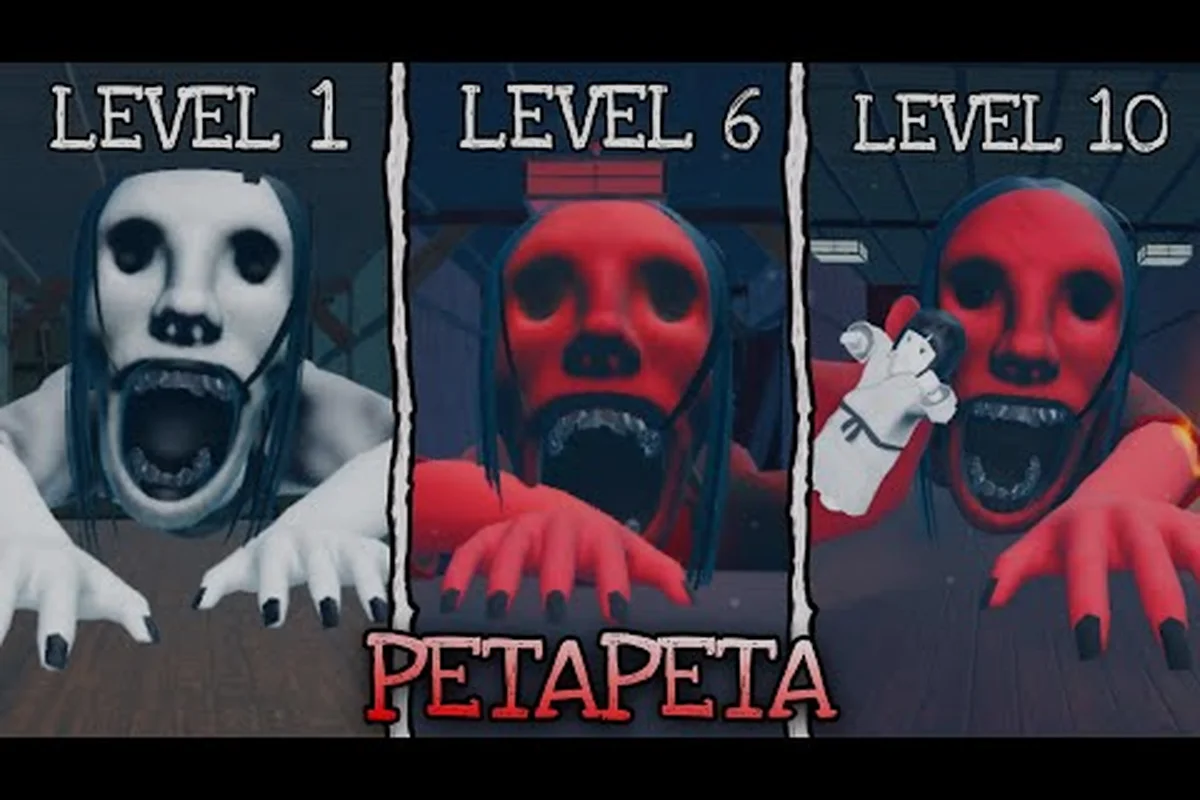
A good PETAPETA reaction video does something a trailer never can: it shows you the exact second a confident creator stops talking. That silence — right when the monster first appears — tells you more about whether this game is worth your time than any store page blurb. Below we break down the best first-time playthroughs, what to watch for, and how to spot a genuine reaction from a staged one.
Why First-Time PETAPETA Reactions Hit Different
The core appeal of this horror title is unpredictability, and nobody is unpredictable like someone who has never seen the monster before. Once a streamer knows the map layout and the scare timings, their reactions flatten into performance. The first hour is where the real value lives.
Community viewers consistently report that blind playthroughs outperform replay content on watch time, because the audience is learning alongside the creator. You see the same confusion, the same wrong turns, and the same panic — and that shared discovery is what makes a PETAPETA reaction video worth 20 minutes of your evening.
There is also a practical benefit. Watching someone fumble through the opening area teaches you the layout faster than a polished tutorial, because you notice the mistakes you would have made yourself. According to player experience shared across community threads, the first-time runs are where most viewers pick up their early survival habits.
-
Genuine tension — the creator does not know where the threat spawns, so their fear is real
-
Learning by proxy — you absorb the map and item locations without a dry walkthrough
-
Chat energy — live audiences amplify scares, and the clip-worthy moments come from that chaos
-
No spoiler armor — nothing is pre-planned, so nothing feels rehearsed
If you want a broader look at how the game actually plays once the shock wears off, the full gameplay video breakdown covers the mechanics in detail — from the monster's spawn-point rotation to the exact moment the chase music shifts and the AI switches from patrol to pursuit. Watching that breakdown after a first-time PETAPETA reaction video is useful precisely because you can compare the streamer's blind panic against the underlying spawn logic: you'll see why their wrong turn at the first junction was predictable, and why the clip-worthy scream happened three seconds before the threat actually appeared on screen. It's the difference between feeling the scare and understanding the scare timer behind it.
How to Spot a Useful PETAPETA Reaction Early
Not every recorded session deserves your click. The difference between a forgettable clip and a genuinely useful PETAPETA gameplay reaction comes down to a handful of traits you can spot within the first two minutes — and the fastest filter is audio. A creator running a clear mic with live commentary during their PETAPETA first time playing will call out the tell before the jumpscare lands, while a muted clip with a soundtrack pasted over the scare gives you nothing to react alongside. Watch how they handle the first death: a real blind player pauses, re-reads the room, and narrates the mistake, whereas a staged PETAPETA reaction video cuts straight to a scream with no reasoning attached. Those two minutes tell you whether the full session is worth 15–40 minutes of your time.
The strongest creators react with their whole body — leaning back, covering their face, laughing at their own panic. But the ones worth subscribing to also narrate their thinking out loud. That running commentary is what turns a scare compilation into something you can actually learn from.
| Trait | Strong Reaction | Weak Reaction |
|---|---|---|
| Audio quality | Clear mic, real-time commentary | Muted or heavily edited |
| Camera | Facecam shows genuine expression | No facecam, flat delivery |
| Pacing | Uncut first encounters | Jump-cut every 3 seconds |
| Commentary | Explains decisions and mistakes | Silent or scripted lines |
| Length | 15–40 minute full sessions | 60-second highlight only |
A useful rule of thumb from community reports: if the creator's voice stays perfectly steady through the first monster encounter, either they were spoiled beforehand or the audio was recorded separately. Real first-time players break composure, and that break is the whole point.
The Blind Playthrough Standard
Blind means blind. A creator who has watched trailers, read wikis, or skimmed a guide is not giving you a true first-time experience. Look for videos where the creator explicitly states they went in cold, and check the upload date against the game's release window — early uploads are far more likely to be genuinely unspoiled.
Commentary That Teaches
The best reaction creators think out loud. When they say "I'm going to check that door because the music changed," you learn a survival cue. When they say "I should not have run," you learn a movement rule. That narration is the hidden value inside an entertaining clip.
Ranking the Reaction Video Formats
Different viewers want different things from a PETAPETA reaction. Some want the full 40-minute descent into panic; others want a tight two-minute highlight reel. Here is how the main formats stack up so you can pick the right one for your mood.
| Format | Best For | Typical Length | Spoiler Risk |
|---|---|---|---|
| Full blind playthrough | Learning the game | 30–60 min | High |
| Trailer reaction | Quick hype check | 5–12 min | Low |
| Highlight compilation | Pure entertainment | 3–8 min | Medium |
| Live stream VOD | Chat interaction feel | 1–3 hours | High |
| Short-form clip | Fast scroll break | 15–60 sec | Low |
The trailer reaction sits in a sweet spot for newcomers. You get the creator's raw first impression of the visuals and sound design without committing to a full session, and the spoiler risk stays minimal because trailers reveal little about actual threats.
If you enjoy the rapid-fire format, the jumpscare compilation and short-form clips roundup collects the punchiest moments into one place. As the table shows, these edits run just 15–60 seconds with low spoiler risk, so they suit a fast scroll break rather than a full session. The trade-off is density: a compilation stitches together only the loudest PETAPETA reaction beats, cutting the buildup and quiet exploration that make a blind playthrough tense, so treat clips as a highlight sampler and save the 30–60 minute full run for when you want the complete panic arc.
Long Sessions Versus Short Highlights
Full sessions win on education, highlight reels win on time. If you are deciding whether to buy the game, watch a full first hour — you will know by minute fifteen whether the tension style suits you. If you already own it and just want the community vibe, highlights deliver the laughs without the downtime.
Trailer Reactions as a Buying Signal
A PETAPETA trailer reaction is essentially a free focus group. Watch three different creators respond to the same trailer and note where they flinch, laugh, or go quiet. Those shared reactions map almost perfectly onto the moments that matter in the actual game.
How to Spot a Staged PETAPETA Reaction Video
The credibility problem is structural, not incidental: PETAPETA reaction videos are cheap to produce and reward outrage, so channels chasing the algorithm learn to reverse-engineer the scare rather than record it. The clearest tell is sequencing — a creator who names the monster or predicts the jumpscare beat before the trailer reaches it is performing recognition, not experiencing it, since genuine PETAPETA first time playing footage is defined by delayed reactions and misread audio cues. Once you can spot that inversion, you stop rewarding manufactured panic and spend your time on PETAPETA trailer reaction and gameplay reaction videos that actually show you how the game plays.
Here is a quick checklist based on patterns viewers have flagged in community discussions, and it is worth treating each item as a probability signal rather than a single smoking gun: a staged PETAPETA reaction video usually trips two or three of these at once, while a genuine PETAPETA first time playing session rarely trips more than one. The tells cluster around timing and repetition — a facecam that cuts to a scream on the exact frame of the jumpscare, or the same "oh my god" cadence recycled across a channel's PETAPETA trailer reaction uploads, is far more diagnostic than any single moment of overacting, because real fear is arrhythmic and inconsistent.
-
Instant recognition — the creator names the monster before it appears on screen
-
Perfect camera timing — the facecam cuts to a scream at the exact frame of the scare
-
No dead air — real sessions have boring stretches; staged ones never do
-
Repeated phrasing — the same "oh my god" cadence across multiple videos
-
Upload speed — a full "first-time" run posted within hours of release is suspicious
Genuine first-time playing looks messier in ways a staged PETAPETA reaction video can't fake. The creator misreads a door creak as a monster spawn, burns a flashlight battery on an empty corridor, backtracks through a room they already cleared, and sometimes dies to a trivial hazard the trailer never showed. That mess is your proof of authenticity, and it's also the most instructive part of the footage: you learn the actual enemy pacing, the item economy, and where the real difficulty spikes sit, none of which a scripted scare reveals.
Getting the Most From a First-Time Watch
Watching a PETAPETA first time playing session is more useful when you treat it like a study session rather than passive entertainment. A few habits turn a fun video into practical preparation. The key is deciding your watch goal before pressing play: a viewer scanning for map layout should scrub through early exploration and door checks, while someone weighing a purchase only needs the first 20 minutes to judge the tension loop. Skipping late-game set pieces and edited highlight reels keeps the session focused, since those compress exactly the discovery beats a PETAPETA reaction video is meant to document in real time.
First, pause when the creator finds an item and note where it was. Second, pay attention to audio cues — the game leans heavily on sound design, and creators who react to a specific noise are telling you which sounds matter. Third, watch how they handle the first chase; that sequence is the closest thing to a tutorial the game offers.
| Watch Goal | What to Focus On | Skip |
|---|---|---|
| Learn the map | Early exploration, door checks | Late-game set pieces |
| Understand tension | First monster encounter | Edited highlight reels |
| Decide on purchase | First 20 minutes | Full 3-hour VODs |
| Pure entertainment | Chat reactions, facecam | Tutorial-style narration |
For viewers who want the polished, cinematic side of the community output, the trending cinematic uploads showcase the game's atmosphere without the shaky-cam chaos. These edits lean on the same sound design that makes a raw PETAPETA reaction video so instructive — the creak of a door, the shift in ambient hum before a monster spawn — but they isolate it cleanly, letting you hear the audio cue without a creator's facecam commentary talking over it. Treat the cinematic cut as a reference track: watch it once to map the atmosphere and the game's visual language, then return to a PETAPETA first time playing session to see how those same beats land in real time, with the genuine surprise and panic intact.
Note the Audio Cues
Sound is the game's primary warning system, and the PETAPETA reaction hinges on it: the creature's head snaps toward any noise above a set threshold, so every audio cue doubles as a tell for where the threat will lunge next. Learn the hierarchy — the low ambient hum that masks footsteps, the sharper click that precedes a head-snap, the rising whine right before a charge — and you stop reacting to the scare and start reading it. Keep a mental list of which sounds precede danger, note how the direction of a snap telegraphs the follow-up attack, and you will enter your own first-time session already calibrated rather than flinching at every creak.
Track the Item Economy
First-time players hoard everything and use nothing — until they panic. Watch which items they reach for under pressure, because that instinct reveals what actually matters when the threat is close. In PETAPETA reaction footage, this pattern shows up almost immediately: newcomers clutch every pickup they find, then fumble the hotbar the moment a threat closes in, burning their rarest consumable on the first scare instead of the fight that decides the run. That single panic-grab is the clearest tell of a first-timer — veterans hold the same item through three encounters and spend it only when the threat curve spikes. Track the reach order, not the inventory count.
Where to Find Reliable Reaction Content
The official channels are the safest starting point for trailer material, since you know the footage is authentic even if the reaction is not. The official channel and trailer archive keeps the source videos in one place, which is handy when you want to compare a creator's reaction against the original trailer frame by frame.
Beyond that, search behavior matters. Queries built around "first time playing" tend to surface blind runs, while generic searches return edited compilations. Sorting by upload date and filtering for longer videos will push the genuine sessions to the top of your results.
Community-curated playlists are another underrated resource. When a group of viewers collectively vouches for a creator's blind run, that social proof is usually more reliable than view counts, which can be inflated by thumbnail clickbait alone. Look for playlists explicitly labeled around "PETAPETA first time playing" rather than generic "PETAPETA reaction video" collections, since the former tends to be assembled by viewers who actually finished the run and can flag where a creator's genuine first-timer confusion gives way to a rehearsed performance. A playlist that pairs each gameplay reaction with its corresponding trailer reaction also lets you cross-check whether the same creator's blind-run authenticity holds across both formats.
Frequently Asked Questions
What is the best PETAPETA reaction video for a newcomer?
Start with a full blind playthrough of the opening hour rather than a highlight reel. You will see the map, the first monster encounter, and the item economy in context, which gives you a realistic sense of pacing. Trailer reactions are a good follow-up once you know what the game looks like in motion.
Are PETAPETA trailer reactions spoiler-free?
Mostly, yes. Trailers reveal atmosphere, creature silhouettes, and sound design but rarely show full encounter mechanics. A creator's reaction may add speculation, though, so if you want a completely clean experience, watch the trailer alone first and save the reactions for afterward.
How can I tell if a first-time playthrough is genuine?
Look for messiness. Genuine players get lost, waste items, and die to trivial mistakes. Staged runs feature perfect camera timing, instant monster recognition, and no dead air. Checking the upload date against the release window is the fastest single filter you can apply.
Why do blind reactions get more views than replays?
Because the audience learns alongside the creator. Once a streamer knows the scare timings, their reactions become performance rather than discovery, and viewers lose that shared tension. Community watch-time patterns consistently favor the unspoiled first session over later, more polished runs.
Do I need to watch a reaction before playing myself?
No, but it helps. A first-time reaction video functions as a low-pressure preview: you absorb layout and audio cues without risking your own run. If you plan to play blind for maximum scare value, skip the videos entirely and go in cold.
The Takeaway
The best PETAPETA reaction content is honest, messy, and unspoiled. Blind first-time sessions teach you the map and the tension rhythm at the same time, trailer reactions give you a fast read on whether the atmosphere lands, and highlight compilations deliver the community energy when you just want a laugh. Filter for genuine reactions, watch the first twenty minutes of a full run before you buy, and treat the creator's panic as your free tutorial.