
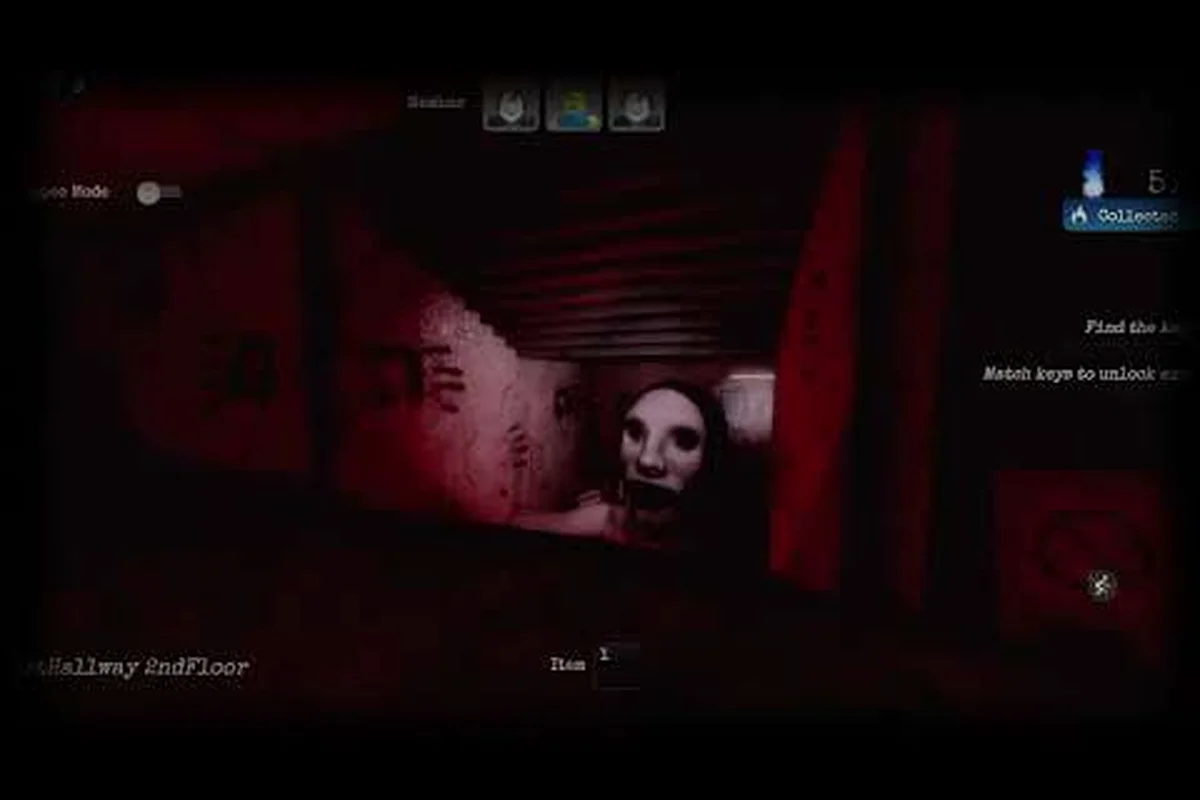
PETAPETA 4K gameplay has turned a small Roblox horror title into one of the most-watched upload categories of the year, and the reason is simple: high-resolution footage of the Teke Teke chase is genuinely terrifying to watch. Whether you want a full run to study before your own match or just a cinematic clip to send to a friend, the current wave of uploads has something for every viewer.
Why 4K Footage Changes How PETAPETA Reads
The jump from 1080p to 4K changes how this game reads on screen. PETAPETA leans on darkness, fog, and narrow corridors, and at higher resolution the faint silhouette of the Teke Teke becomes visible a half-second earlier than it does in compressed footage. That half-second is the entire tension of a chase sequence, and it is why creators who record in 4K consistently pull bigger audiences than those who do not.
| 4K 录制指标 | 1080p 重上传(压缩后) | 4K/60fps 原生录制 | 对追逐可读性的实际影响 |
|---|---|---|---|
| The Hollow 酒店走廊远端雾渐变 | 远景轮廓被压缩成块状,怪物接近距离约缩短一半 | 远端雾渐变可分辨,Teke Teke 剪影提前约 0.5 秒显现 | 长视线走廊里提前半秒即等于多一次转向决策窗口 |
| 地下室楼梯间低光 + 紧凑几何 | 怪物与墙面纹理糊成一片,几乎不可辨 | 低光下轮廓与墙面分离,可判断贴墙还是绕行 | 决定玩家是否敢在楼梯拐角停顿 |
| 最终逃生走廊粒子 + 动态模糊叠加 | 低码率下崩成 blocking artifacts | 粒子与模糊层仍保留边缘,路线可读 | 决定最后一段冲刺是否敢全速 |
| 完整通关时长(HorrorJackStar 版) | — | 30:50 全程 4K60FPS | 可整段暂停逐帧核对路线 |
| 单局 PVP 长录像(Sai3lplays 版) | — | 66:47 录像 | 长时段素材用于比对不同遭遇的帧数据 |
Community reports suggest the visual upgrade matters most in three specific situations, and each one maps to a distinct rendering bottleneck rather than a vague "looks better" claim. In the Hollow hotel hallway, the long sightline means the Teke Teke's approach is legible at distance only when 4K resolves the far-end fog gradient; in basement stairwells, low light plus tight geometry is where 1080p compression smears the monster into the wall texture; and in the final escape corridor, particle effects and motion blur stack until lower bitrates collapse into blocking artifacts. Watching the same chase at 4K/60fps versus a 1080p reupload makes the difference obvious within the first two seconds of each encounter.
-
The Hollow hotel hallway — the longest sightline in the game, where the monster's approach is readable at distance
-
Basement stairwells — low light plus tight geometry, where compression artifacts hide the monster entirely
-
The final escape corridor — where particle effects and motion blur collide and lower bitrates turn to mush
There is a practical side too. A PETAPETA horror video recorded at 4K/60fps gives you clean frame data when you are trying to learn a route. You can pause a clip and see exactly where a survivor turned, which door they committed to, and how much distance they had before the chase ended. That is study material, not just entertainment.
Upload quality varies widely, though. Some channels label a video 4K when it was upscaled from 1080p, and the difference is obvious the moment a chase starts. Look for creators who publish their recording settings in the description, and treat any clip that looks soft during fast motion as an upscale.
Why the Cinematic Angle Caught On
PETAPETA cinematic edits are a separate craft from raw gameplay. Creators cut out the HUD, slow the frame rate during the reveal, layer ambient audio over the chase, and grade the footage cooler to push the hotel into a sickly blue. The result plays less like a Let's Play and more like a short horror film, which is exactly why these clips travel so well on social platforms.
The best cinematic uploads share a few traits. They keep the monster off-screen for the first thirty seconds, they use the game's own sound design rather than a music track, and they end on a cut rather than a kill. Restraint is what separates a genuinely unsettling edit from a loud one.
The Trending Upload Categories Right Now
PETAPETA trending content sorts into a handful of recognizable buckets, and each one attracts a different kind of viewer. Knowing which bucket you are clicking into saves a lot of wasted time, because a two-hour full run and a forty-second cinematic short are not interchangeable.
| Category | Typical Length | Best For | What to Expect |
|---|---|---|---|
| Full playthrough | 45–120 min | Learning routes and pacing | Uncut survivor runs, commentary optional |
| Cinematic edit | 1–5 min | Atmosphere and shareability | HUD-free footage, color grading, sound design |
| Chase highlight | 30–90 sec | Quick tension | Single pursuit, often ending in a grab |
| Monster POV | 5–15 min | Understanding the hunter | First-person Teke Teke perspective |
| Reaction and first-time | 10–25 min | Entertainment | Genuine scares, blind navigation |
The full playthrough bucket is where most new viewers start, and it is also where the most reliable information lives. A complete run shows you how long a match actually takes, how often the monster rotates, and where survivors tend to die. If you want the broader picture of how matches flow, the gameplay video collection covers the core loop in more depth than a single clip can.
Monster POV footage is the fastest-growing category in the set. Watching from the hunter's perspective reframes everything: the corridors that feel claustrophobic as a survivor look like open hunting lanes, and the sound cues you rely on as prey turn out to be the same ones the monster uses to track you.
Reading View Counts Honestly
A high view count on a PETAPETA popular video does not automatically mean high quality. Shorts inflate fast because they autoplay, while a ninety-minute full run might sit at a fraction of the number despite being far more useful. Compare views against upload date and channel size rather than in isolation, and check whether the comments mention the footage being blurry or the audio being out of sync.
How to Find a Genuine PETAPETA Full Video
Searching for a PETAPETA full video returns a lot of noise: cut-up streams, reuploads, and compilations stitched from other people's footage, many of them mislabeled as "4k gameplay" when the source was captured at 720p and upscaled. A few filters cut through it quickly, starting with the upload date relative to the game's patch history — a "full match" posted before a major balance update often shows outdated enemy spawn timing and map layout, so cross-check the version number in the description before committing 45 minutes to it.
| Check | Good Sign | Warning Sign |
|---|---|---|
| Duration | 45 min or longer, single match | 20 min labeled "full" |
| Description | Recording settings listed | Empty or keyword-stuffed |
| Channel history | Multiple PETAPETA uploads | One upload, unrelated catalog |
| Audio | Game sound intact | Constant loud music overlay |
| Comments | Discussion of specific moments | Generic or disabled |
Start with channels that have covered the game more than once. A creator who has uploaded five matches understands the pacing and will not cut the boring middle section that actually teaches you the map. Single-upload channels are usually reuploads, and reuploads are where you find broken audio and cropped frames.
If you want the complete picture of how a match is structured rather than a highlight reel, a written breakdown of the core game mechanics pairs well with a long-form video. Watch the run first, then read the mechanics so the terminology lines up with what you saw.
Full Movie Claims and What They Actually Are
Searches for a PETAPETA full movie mostly lead to long compilations, not an official film. There is no theatrical release, and any upload claiming to be one is either a stitched-together playthrough or a fan edit with a title card slapped on the front. That is not a scam in itself, but it does mean you should expect gameplay footage rather than a scripted narrative.
The better fan edits lean into this honestly. They present themselves as cinematic compilations, keep the game audio, and let the atmosphere carry the runtime. Those are worth your evening. The ones that promise a movie and deliver a silent, watermarked stream are not.
Building a Watch List Around Your Play Style
What you watch should depend on what you are trying to get out of the game. A survivor main and a monster main need completely different footage, and mixing them wastes time. A survivor grinding out escapes needs chase highlights that show clean corner turns and pallet timing, while a monster player hunting for kill rate should watch monster POV footage with the HUD visible so they can read cooldown and stamina management in real time. Even the 4k resolution matters here: PETAPETA 4k gameplay preserves the fine visual tells — the flicker of a survivor breaking line of sight, the exact frame a corner turn starts — that compressed clips smear into mush.
-
New to the game — start with a full survivor run, then a monster POV of the same map
-
Learning to escape — prioritize chase highlights that show clean corner turns
-
Learning to hunt — watch monster POV footage with the HUD visible
-
Playing with friends — look for multiplayer sessions, which show how the survivor and monster modes interact under pressure
-
Just here for scares — cinematic edits deliver the tension without the downtime
Multiplayer footage is underrated as a learning tool. Solo runs hide how much of the game is about reading other people: who breaks formation first, who doubles back, who panics at the stairwell. Group sessions expose all of that, and they are usually more entertaining to watch because the reactions are real.
Matching Frame Rate to What You Watch For
Frame rate matters more here than in most games. A 30fps cinematic edit looks intentional and filmic, while a 30fps gameplay clip looks broken during a chase. If you are watching to learn, insist on 60fps. If you are watching for atmosphere, the lower frame rate is a feature rather than a flaw.
Resolution follows the same logic. 4K is genuinely useful for spotting the monster at distance and for reading a survivor's body language in a wide shot. For a close-quarters jump scare, 1080p is indistinguishable once the camera starts moving.
The Cinematic Craft Behind the Best Clips
The strongest PETAPETA cinematic uploads are edited by people who understand horror pacing, not just video editing. They build in silence, they let a shot sit two seconds longer than comfortable, and they resist the urge to add a stinger every time something moves.
Three editing choices show up again and again in the clips that perform well, and each one attacks a different layer of immersion. The first is HUD removal: even at native 4K, a visible health bar or interaction prompt tells the viewer they are watching gameplay rather than found footage, so top editors crop to a 2.39:1 letterbox or mask the corners where PETAPETA parks its stamina and sanity meters. The second is cool color grading, pushing shadows toward blue and desaturating the hotel's wallpaper so corridors read as abandoned rather than lit for a player. The third is a diegetic-only audio pass, letting the Teke Teke's dragging approach and the survivor's own breathing carry the dread that a licensed music sting would flatten.
-
HUD removal — the interface breaks immersion instantly, and the best editors crop or mask it out
-
Cool color grading — pushing shadows toward blue and desaturating the walls makes the hotel feel abandoned rather than lit
-
Diegetic audio only — the game's own footsteps and ambience carry more dread than any licensed track
There is a storytelling layer too. A good edit establishes the survivor, shows them making one bad decision, and then lets the consequence play out. That is a three-act structure in ninety seconds, and it is why some clips get shared by people who have never played the game.
The lore behind the monster gives editors more to work with than most horror titles offer. The Japanese urban legend roots of the Teke Teke give a cinematic cut a natural cold open, and creators who lean into that framing produce clips that feel like they belong to a larger story rather than a single match.
Where Reaction Content Fits
Reaction uploads sit at the opposite end of the craft spectrum, and they work for a different reason. The value is not the footage, it is watching someone experience the reveal for the first time. Blind playthroughs capture genuine panic in a way that rehearsed runs cannot, and that authenticity is why first-time reaction videos keep pulling steady numbers months after upload.
If you are deciding what to watch tonight, pick based on mood rather than metrics. A cinematic edit is a five-minute commitment with a clean payoff. A full run is an evening. A reaction video is background noise with occasional shouting. All three are legitimate ways to engage with the game, and the trending charts reward each of them for different reasons.
Frequently Asked Questions
Is there an official PETAPETA full movie?
No. There is no theatrical or streaming film release. Uploads labeled as a full movie are fan-made compilations of gameplay footage, usually stitched from multiple matches with light editing. They can still be entertaining, but treat the label as a description of length rather than an official product.
Why do creators upload PETAPETA 4K gameplay instead of 1080p?
Because the game's tension depends on spotting the monster early in low light, and 4K preserves that detail through fog and compression. Higher resolution also survives fast camera movement during chases, where lower bitrates smear the frame and hide the silhouette entirely.
What is the difference between a cinematic edit and a normal playthrough?
A cinematic edit removes the HUD, applies color grading, and uses only in-game audio to build atmosphere, usually running under five minutes. A playthrough is uncut, shows the interface, and runs forty-five minutes or longer. One is a short film, the other is a reference.
Are monster POV videos useful for learning the game?
Yes, and they are arguably the fastest way to improve as a survivor. Watching the hunter's perspective shows which sound cues give away your position and which corridors offer real escape routes, information that is nearly impossible to gather from survivor footage alone.
How can I tell if a trending clip is actually 4K?
Check the resolution option in the player and watch a fast-motion section. Genuine 4K stays sharp during a chase, while upscaled footage softens and shows blocking artifacts. Creators who record natively usually list their capture settings in the video description.
The current crop of PETAPETA footage rewards viewers who know what they are looking for. Cinematic edits deliver atmosphere in minutes, full runs teach route discipline over an evening, and monster POV clips quietly offer the best tactical education of the three. Pick the format that matches what you want from the game, verify the upload quality before committing your time, and the trending charts become a genuinely useful library rather than a slot machine.