
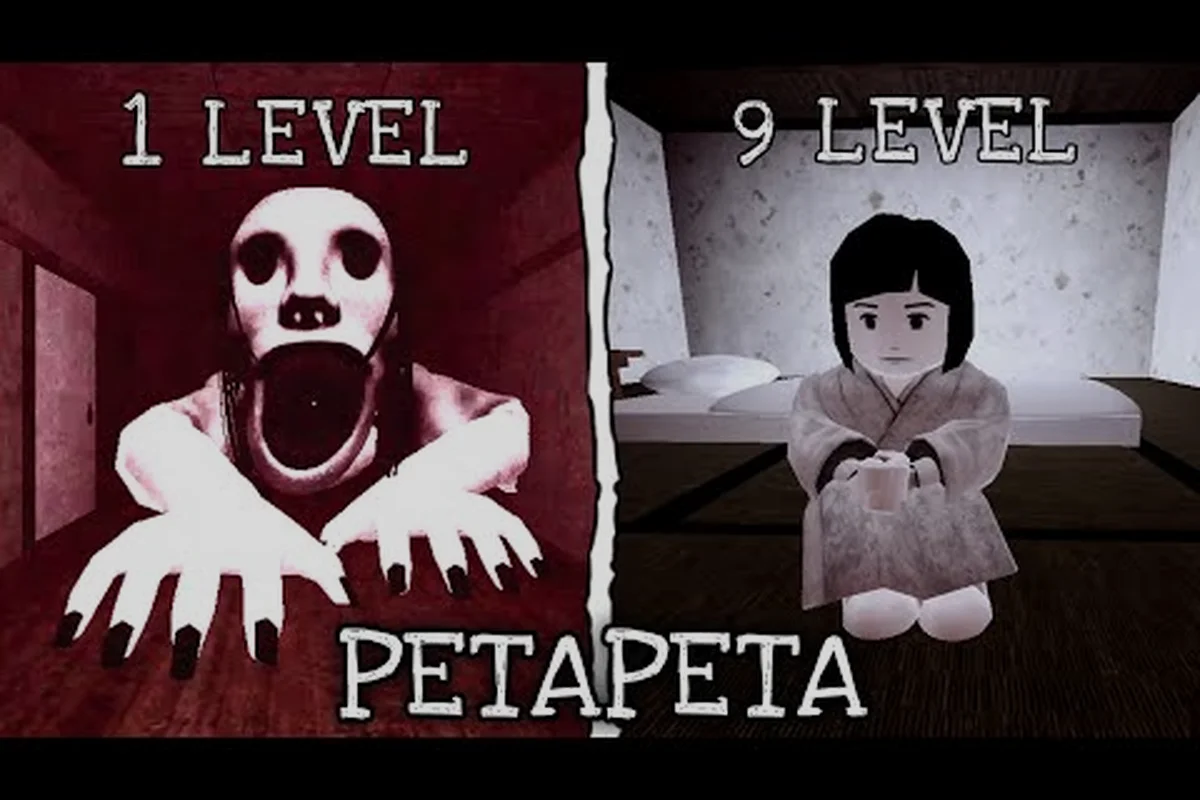
Watching someone else clear a level is often faster than dying to it six times yourself. A good PETAPETA video shows you the exact route, the hiding timing, and the moment the monster commits — details that are almost impossible to absorb from a written description alone. This guide breaks down which PETAPETA YouTube uploads are actually worth your time, how to pick the right format for your skill level, and where a walkthrough video stops being helpful and starts spoiling the experience.
The short answer up front: match the format to your goal. If you are stuck on a specific room, you want a focused PETAPETA video guide with commentary. If you want to feel the tension yourself, a PETAPETA no commentary run preserves the atmosphere. And if you already know the game inside out, a PETAPETA speedrun video teaches you optimizations no casual playthrough will ever show.
The "Why" Test for a PETAPETA Walkthrough Video
Not every upload labeled as a walkthrough deserves the name. The best ones share a handful of traits, and once you know what to look for, you can filter out the noise in seconds. The single biggest signal is whether the creator explains why they made a choice, not just what they did.
Here is the checklist experienced viewers run through before committing twenty minutes to a PETAPETA video: first, confirm the upload's current build matches the live game, since a route recorded before a patch can send you into a dead end or a patched-out shortcut; second, scrub to a mid-run chase and check whether monster timing is visible on screen, because a creator who cuts away the moment the creature enters the frame is hiding the exact positioning data you came for. A practical test is to jump to the two-minute mark and watch ten seconds uninterrupted — if the player is still narrating why they doubled back or held a corner, the rest of the walkthrough is likely worth your time.
-
Route clarity: the player shows the full path from spawn to exit, including backtracking, rather than jump-cutting past the hard parts.
-
Monster timing on screen: you can see when the creature enters the frame and how long the player waits before moving.
-
Death and retry included: a creator who leaves failed attempts in is showing you what actually goes wrong, which is more instructive than a perfect run.
-
Current build: the upload matches the live version of the game, since older footage may show routes that no longer work.
-
Readable UI: the HUD, objective markers, and any on-screen prompts stay visible so you can map what you see to your own screen.
A walkthrough that hides its deaths is a highlight reel, not a teaching tool. According to community reports, the most-recommended uploads are almost always the ones where the player narrates their reasoning during a chase instead of staying silent until the escape.
The difference between a guide and a playthrough
A PETAPETA walkthrough video that teaches has a structure: it introduces the level, names the threat, then walks the route with pauses at decision points. A plain playthrough just plays. Both have value, but they serve different moods. If you are actively stuck, pick the structured one. If you want background viewing while you eat, the unstructured one is fine.
Why view count is a weak signal on its own
A huge view count tells you a video got pushed by the algorithm, not that it is accurate. Cross-check the upload date against the current patch and skim the first two minutes. If the creator is still using an old route or an outdated item name, move on — the rest of the video likely carries the same staleness.
The PETAPETA Video Guides Everyone Watches
The most-watched entry point into the game's video scene is Crano's Levels 1 to 6 walkthrough, which has pulled in roughly 8.1 million views — a number that reflects how many new players hit the early difficulty wall and went looking for help. It covers the opening stretch in one continuous run, which makes it the natural first stop for anyone learning the basics.
The five formats below cover nearly every PETAPETA video you will run into on YouTube, and the differences matter more than they look: a 20–45 minute commented walkthrough is built for a first-timer stuck on a level, while a 5–15 minute speedrun video assumes you already know the layout and only want the optimal route. Picking the wrong one wastes time — a no-commentary run preserves the monster's tension but explains none of the player's decisions, so it teaches you nothing about why a safe path works. Use the table to match the format to your current problem before you click.
| Format | Best for | Typical length | Main weakness |
|---|---|---|---|
| Commented full walkthrough | First-time players stuck on a level | 20–45 min | Spoils puzzle solutions |
| No-commentary run | Preserving atmosphere and tension | 15–30 min | No explanation of decisions |
| Speedrun video | Learning optimal routes | 5–15 min | Assumes you know the level |
| Level-specific guide | One room or one mechanic | 3–8 min | Lacks wider context |
| Reaction/first-play | Gauging difficulty before buying | 10–25 min | Often edited for drama |
The Levels 1 to 6 upload sits in the first row: long, narrated, and paced for someone who has never seen the monster before. If you want the written equivalent alongside it, the early level walkthrough for levels 1 to 3 covers the same ground in text form and is easier to skim mid-run.
Where to find level-specific coverage
Once you are past the opening, broad walkthroughs get less useful because the problems become specific. Search for the exact level number plus the word "guide" rather than "walkthrough" — creators who title their videos that way usually keep them tight and focused on a single obstacle. The levels 4 to 6 breakdown pairs well with those shorter videos, since you can read the mechanic and then watch it executed.
Event and seasonal footage
Limited-time content generates a burst of uploads that age quickly. If you are chasing an event clear, check that the video was published during the current event window, because routes and item spawns shift between cycles. The Hollow event guide is a useful reference to hold open while you watch, so you can confirm the creator is running the same version you are.
How to Choose a PETAPETA Video Guide for Your Skill Level
Picking the wrong format wastes time in both directions. A beginner watching a speedrun learns nothing because the runner never explains the basics; a veteran watching a beginner walkthrough gets bored in ninety seconds. Match the format to where you actually are.
The fastest way to calibrate is to skim the first two minutes of a PETAPETA YouTube upload before committing: a commented walkthrough that names each mechanic out loud suits someone still learning the controls, while a no-commentary playthrough assumes you already know why the runner crouches before every gap. If you are stuck on a single room, a level-specific PETAPETA video guide timestamped to that room beats a 40-minute full walkthrough, because scrubbing a long VOD to find one jump costs more time than the jump itself.
| Your situation | Recommended format | What to watch for |
|---|---|---|
| Never played, deciding to try | Reaction or first-play video | Genuine reactions, unedited chases |
| Stuck on levels 1–3 | Commented full walkthrough | Route shown end to end |
| Stuck on one specific room | Level-specific guide | Timestamped to your room |
| Comfortable, want clean runs | No-commentary playthrough | Full route, no cuts |
| Chasing fast clears | Speedrun video | Route skips and timing tricks |
| Returning after a break | Recent patch-matched guide | Upload date within current version |
The trap most players fall into is watching a full walkthrough for a level they have not reached yet. It feels productive, but the information does not stick because you have no context to attach it to. Watch one level ahead at most.
Reading a creator's skill level before you commit
Skim to the first chase sequence. If the player keeps their camera pointed at the monster while moving, they understand the game's spatial logic. If they get cornered repeatedly in the first two minutes, the video will show you mistakes rather than solutions. Neither is worthless, but only one is a guide.
When a video is the wrong tool
Some problems are better solved by reading than watching. If your issue is a sequence puzzle with a fixed solve order, a text explanation lets you pause and re-read at your own pace, while a video forces you to scrub backward. Community data suggests players solve order-based puzzles faster from written steps, then use video only to confirm the timing window.
No Commentary and Speedrun Formats Explained
These two formats sit at opposite ends of the spectrum, and both are more useful than their low production values suggest. A PETAPETA no commentary video strips out the personality and leaves only the run — which is exactly what you want when the game's audio cues are doing the teaching.
The value of a silent run is that sound design carries information. Footsteps, ambient shifts, and the change in music all signal where the monster is. When a creator talks over that, you lose the very cues the game wants you to learn. Watching a clean run with headphones teaches you the audio language of the game better than any narrated explanation.
What speedruns actually teach
A PETAPETA speedrun video is not just about going fast. Runners have mapped which routes shave seconds and, more importantly, which risks are worth taking — a distinction that separates a clean run from a wipe. The difference usually comes down to resource economy: a speedrunner skips a pickup room because the ammo saved by not fighting outweighs the detour, and that same logic tells you when a shortcut is a trap. Watching one shows you:
-
Route skips that bypass a room entirely, saving both time and exposure.
-
Hiding spot efficiency — which spots let you re-enter the route fastest after the monster passes.
-
Timing windows for crossing open ground, measured in seconds rather than guessed.
-
Recovery patterns after a mistake, which is where most casual players lose the run.
You do not need to run the game competitively to benefit. Borrowing one or two safe optimizations from a speedrun often turns a shaky clear into a comfortable one. Take the timing windows for crossing open ground: a casual player usually waits for the monster to fully leave the corridor, while a runner counts the seconds until its patrol animation commits and moves on the tail end of that window — the same crossing, but with far less dead time spent exposed. Similarly, adopting a runner's hiding spot efficiency means picking the locker or alcove that lets you re-enter the route fastest after the monster passes, rather than the nearest one, which can cost you a full loop back through a cleared room. Even a single route skip — bypassing one pickup room because the ammo saved by not fighting outweighs the detour — removes an entire encounter's worth of risk from your run. The point is not to shave your clear time to a record; it is to inherit decisions that have already been stress-tested across thousands of attempts, so your first or second playthrough avoids the wipe that a guessed route invites.
Aligning the Video Format With Your Goal
If your goal is to feel the game as designed, watch no-commentary. If your goal is to stop dying, watch commented. If your goal is to master a level you have already cleared, watch speedrun footage. Mixing all three in one sitting is the fastest way to confuse yourself.
Giving Every PETAPETA Video a Job
A random playlist of PETAPETA YouTube uploads is entertainment. A curated watch list is a study tool. The difference is whether each video has a job. Before you add anything, decide what problem it solves, then keep the list short enough that you will actually finish it.
| Watch-list entry type | Source video (runtime) | Problem it solves | Max time to spend | Delete trigger |
|---|---|---|---|---|
| Single-room obstacle ticket | Crano — "PETAPETA: Levels 1 to 6 – (Full Walkthrough)" (19:37) | One stuck room in Levels 1–6 | 90-second segment only | Level cleared |
| Chase-sequence timing ticket | CashBlox — "ROBLOX PETAPETA" (27:20) | Chase timing in mid-game levels | 2 minutes | Chase survived once |
| Event badge ticket | WaffleTrades — "How To Get PETAPETA Badge in The Hollow Roblox Event!" (3:02) | The Hollow event badge unlock | Full 3:02 (short enough to watch whole) | Badge earned |
| Official update/trailer check | OmochiStudio / おもちスタジオ channel (6,500+ subs) | Whether a mechanic changed after a patch | 5 minutes, once per update | Patch notes read |
| Full-route comparison | Crano Levels 1–6 walkthrough (19:37) | Comparing your route after a first clear | Post-clear only | Route compared |
A practical routine looks like this: treat each entry as a single-problem ticket rather than a full playthrough archive, and log the specific obstacle — the exact room, chase sequence, or timing puzzle — in the list title so you can search for it later. Keep no more than three or four active entries at once, since a list longer than that turns into a backlog you scroll past instead of a queue you work through. When a no commentary PETAPETA video solves the problem, note the timestamp of the relevant segment in the entry and delete the video once the level is cleared, so the list only ever holds live problems rather than a growing archive of solved ones.
-
Play the level first, unassisted, until you hit a wall or clear it.
-
Identify the exact failure point — the room, the chase, the puzzle, the timing.
-
Search for that specific problem, not the whole level.
-
Watch only the relevant segment, then close the tab and try again.
-
Save the full walkthrough for a level you have already beaten, as a comparison tool.
This keeps spoilers minimal and makes the information stick, because you are applying it within minutes of learning it. The retention gap is measurable: a mechanic you execute immediately after watching a 90-second segment survives the next session, while a 40-minute full walkthrough watched passively is largely gone by the time you load the level. Players who watch entire walkthroughs before playing report the levels feel flatter afterward — the tension is gone before they arrive, and the PETAPETA video's choreographed route replaces your own read of the room. The same logic explains why a PETAPETA speedrun video makes a poor first-look tool: its skips assume frame-perfect timing you have not built yet, so save it for after you have cleared the level once and can compare routes honestly.
Keeping the list current
Patch changes can invalidate routes overnight. Re-check the upload date on anything older than a couple of months before trusting its pathing, and prefer creators who pin a comment noting which version they recorded on. A short note like "recorded on current build" is worth more than a polished thumbnail.
Pairing video with written references
Video is excellent for motion and timing; text is better for lists, item names, and step order. The strongest approach combines both — watch the route once, then keep a written reference open while you play so you are not scrubbing a timeline mid-chase. The hotel map reference is a good example of something you want in text form rather than on video, because you need to glance at it in seconds.
Common Mistakes When Following PETAPETA Videos
Even a great walkthrough can lead you astray if you follow it too literally. The most frequent problem is copying a route without understanding why it works — the moment the monster behaves slightly differently, the whole plan collapses because you never learned the underlying logic.
Watch for these traps: the ones that bite hardest are subtle rather than obvious. A creator's route may assume a specific monster spawn pattern or a door that only opens after a certain trigger, so a single skipped step sends you into a dead end with no reset. Version drift matters too — a PETAPETA walkthrough recorded on an older build can show a shortcut that the current patch has sealed off entirely. And when a no-commentary video hides the reasoning behind each turn, it is easy to memorize the path without ever learning to read the monster's tells.
-
Copying speedrun skips too early: those routes assume frame-perfect timing and deep familiarity. Learn the safe path first.
-
Ignoring the version mismatch: a route from an older build may route you into a wall that no longer opens.
-
Watching ahead of your progress: spoilers reduce tension and the details do not stick without context.
-
Muting the game to hear the creator: you lose the audio cues that tell you where the threat is.
-
Treating one run as gospel: monster behavior has variance, so watch two creators before assuming a route is safe.
The underlying habit worth building is reading the monster rather than memorizing a path. A video that shows you how to interpret a chase is more valuable than one that shows you a fixed sequence of turns, because the first skill transfers to every level and the second does not.
Judging whether a video is trustworthy
Three quick checks: does the creator show the full route, do they acknowledge when something went wrong, and does the upload date match the current version? A video that passes all three is usually reliable. One that fails two of them is entertainment, not reference.
Frequently Asked Questions
What is the most popular PETAPETA walkthrough video?
Crano's Levels 1 to 6 walkthrough is the most-watched entry point, with roughly 8.1 million views as of late 2026. It covers the opening stretch in one continuous narrated run, making it the standard first stop for players who hit the early difficulty wall and want to see the route executed cleanly.
Should I watch a PETAPETA no commentary video or a narrated one?
It depends on your goal. A narrated PETAPETA video guide explains why each decision was made, which helps when you are stuck. A no-commentary run preserves the audio cues and tension, so it teaches you to read the monster through sound. Use narrated footage to solve problems and silent footage to build instinct.
Are PETAPETA speedrun videos useful for casual players?
Yes, if you borrow selectively. Speedruns reveal route skips, efficient hiding spots, and precise timing windows for crossing open ground. You do not need to compete — adopting one or two safe optimizations from a speedrun often turns a shaky clear into a comfortable one without demanding frame-perfect execution.
How do I know if a walkthrough is still accurate?
Check the upload date against the current version and skim the first two minutes for outdated routes or item names. Prefer creators who note which build they recorded on. Anything older than a couple of months deserves a quick verification before you trust its pathing, since patch changes can invalidate routes overnight.
Can watching videos spoil the PETAPETA experience?
It can if you watch ahead of your progress. The tension depends on not knowing what is coming, and players who watch full walkthroughs before playing often report the levels feel flatter afterward. Watch one level ahead at most, and save full playthroughs for levels you have already cleared.
The best PETAPETA video is the one that answers the question you actually have right now — a focused clip for a stuck room, a silent run for atmosphere, a speedrun for mastery. Build a short, purposeful watch list, verify it against the current build, and treat every upload as a reference rather than a script. That way the videos sharpen your own play instead of replacing it.